
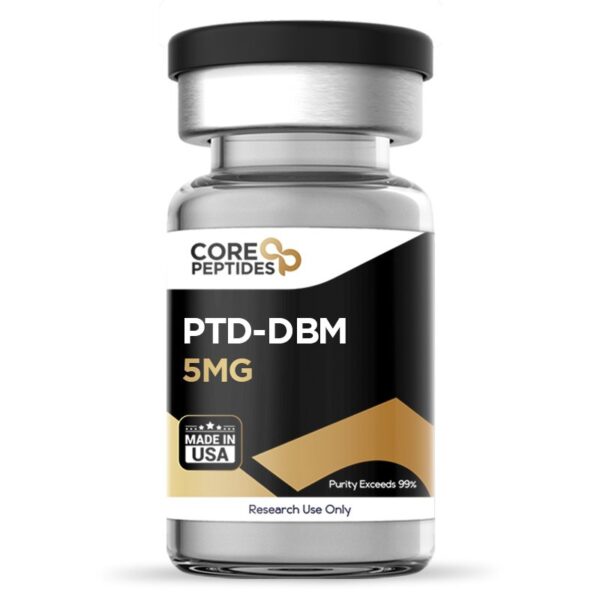
PTD-DBM (5MG)
CHF 80.10
PTD-DBM (Protein Transduction Domain–Dishevelled Binding Motif) is a synthetic cell-penetrating peptide designed to competitively inhibit the CXXC5-Dvl interaction and activate Wnt/β-catenin signaling. The peptide consists of an octa-arginine protein transduction domain (PTD) for cellular delivery, a GGGG linker, and a Dishevelled-binding motif (DBM) that competes with CXXC5 for the Dvl PDZ domain. Researchers investigate PTD-DBM for its effects on β-catenin stabilization, hair follicle neogenesis, wound healing, and tissue regeneration in preclinical models. Available for laboratory research purposes only. Buy PTD-DBM in Switzerland from Core Peptides, a trusted research peptide supplier.
What Is PTD-DBM?
Buy PTD-DBM in Switzerland (Protein Transduction Domain–Dishevelled Binding Motif) is a synthetic cell-penetrating peptide designed to modulate Wnt/β-catenin signaling by disrupting the inhibitory interaction between CXXC5 and Dishevelled (Dvl). For researchers looking to buy PTD-DBM in Switzerland for Wnt signaling and tissue regeneration studies, this peptide offers a powerful tool for investigating CXXC5-Dvl protein-protein interactions and their downstream effects.
The peptide features a bifunctional structure comprising an octa-arginine protein transduction domain (PTD) for efficient cellular delivery, a GGGG linker, and a Dishevelled-binding motif (DBM) that competitively binds to the PDZ domain of Dvl. Researchers at Yonsei University in South Korea developed PTD-DBM following the discovery that CXXC5 a CXXC-type zinc finger protein acts as a negative feedback regulator of the Wnt/β-catenin pathway by binding directly to Dvl. The Choi laboratory demonstrated that disrupting this CXXC5-Dvl interaction could reactivate Wnt signaling, leading to hair follicle neogenesis and accelerated wound healing in mouse models. For those looking to buy PTD-DBM in Switzerland, Core Peptides offers high-quality research-grade material for laboratory applications.
PTD-DBM Research Overview
PTD-DBM has attracted significant research interest as a molecular tool for investigating Wnt/β-catenin signaling and tissue regeneration. The peptide’s design a fusion of a protein transduction domain with a Dishevelled-binding motif enables targeted disruption of the CXXC5-Dvl interaction, a key negative regulatory node in the Wnt pathway.
Research interest in PTD-DBM centers on its ability to stabilize β-catenin and activate downstream transcriptional programs involved in cell proliferation, differentiation, and tissue regeneration. Studies have demonstrated that PTD-DBM promotes hair follicle neogenesis, accelerates wound closure, and enhances collagen synthesis in preclinical models. Consequently, PTD-DBM has generated significant interest as a research tool for investigating Wnt pathway biology, hair follicle regeneration, and cutaneous wound healing.
When researchers choose to buy PTD-DBM in Switzerland for laboratory studies, they gain access to a compound that may help elucidate mechanisms of Wnt/β-catenin signaling, CXXC5-Dvl interactions, and tissue regeneration at the molecular level.
How Does PTD-DBM Work?
PTD-DBM exerts its biological effects through competitive inhibition of the CXXC5-Dvl interaction and subsequent activation of the canonical Wnt/β-catenin signaling pathway. The peptide’s mechanism involves several interconnected steps.
CXXC5-Dvl Interaction Disruption
Under normal conditions, CXXC5 acts as a negative feedback regulator of the Wnt/β-catenin pathway by binding to the PDZ domain of Dishevelled (Dvl), a key scaffolding protein in canonical Wnt signaling. This CXXC5-Dvl interaction suppresses downstream Wnt activity by promoting β-catenin degradation.
PTD-DBM contains a Dishevelled-binding motif (DBM) that competes with CXXC5 for the same docking surface on the PDZ domain of Dvl. By competitively binding to Dvl, PTD-DBM displaces CXXC5 and prevents the CXXC5-mediated degradation of β-catenin.
β-Catenin Stabilization and Nuclear Translocation
Following the disruption of the CXXC5-Dvl interaction, β-catenin stabilizes in the cytoplasm and accumulates to sufficient levels for nuclear translocation. Once in the nucleus, β-catenin acts as a transcriptional co-activator for TCF/LEF-dependent genes involved in cell proliferation, differentiation, and tissue regeneration.
In vitro studies have demonstrated that PTD-DBM (1-10 μM) increases TOPFlash luciferase activity by 3-5-fold in HEK293T cells, comparable to Wnt3a conditioning. The peptide also induces β-catenin protein expression and nuclear translocation as confirmed by immunofluorescence.
Downstream Effects on Cell Proliferation and Differentiation
PTD-DBM promotes cell proliferation and migration in dermal papilla cells and fibroblasts, with an EC50 of approximately 2-5 μM. The peptide upregulates α-SMA (alpha-smooth muscle actin) and type I collagen, markers associated with wound healing and tissue remodeling.
Additionally, the peptide induces the expression of β-catenin, α-SMA, and type I collagen, supporting its role in promoting skin wound healing and tissue regeneration.
Researchers who buy PTD-DBM in Switzerland for research purposes can investigate these mechanisms across diverse experimental models of Wnt signaling and tissue regeneration.
Why Is PTD-DBM Studied?
Researchers study PTD-DBM primarily for its potential relevance to Wnt/β-catenin signaling, hair follicle biology, and tissue regeneration. The peptide’s ability to selectively disrupt the CXXC5-Dvl interaction makes it a valuable tool for understanding the molecular basis of Wnt pathway regulation and its role in tissue homeostasis and repair.
The peptide’s connection to the CXXC5-Dvl negative feedback loop has made it a focus of hair follicle and wound healing research. Preclinical studies have explored PTD-DBM’s effects on hair follicle neogenesis, wound-induced hair neogenesis (WIHN), and cutaneous wound healing in various experimental models.
Moreover, researchers study PTD-DBM in the context of androgenetic alopecia and regenerative medicine. The increased expression of CXXC5 in bald scalps and the excellent effects of PTD-DBM on hair growth in mice have raised hopes for the application of this peptide in hair growth research. Combinatory treatment of PTD-DBM with valproic acid (VPA), an activator of the Wnt/β-catenin pathway, further induces hair regrowth and wound-induced hair neogenesis.
Researchers who buy PTD-DBM in Switzerland from Core Peptides can incorporate this peptide into their studies on Wnt signaling, hair follicle biology, and tissue regeneration.
PTD-DBM Research Areas
| Research Area | Description |
|---|---|
| Wnt/β-Catenin Signaling | Investigating PTD-DBM’s activation of canonical Wnt signaling via CXXC5-Dvl disruption |
| Hair Follicle Neogenesis | Studying PTD-DBM’s potential to induce new hair follicle formation in preclinical models |
| Wound Healing | Examining PTD-DBM’s effects on cutaneous wound closure and tissue regeneration |
| β-Catenin Stabilization | Exploring PTD-DBM’s influence on β-catenin protein levels and nuclear translocation |
| CXXC5-Dvl Interaction | Investigating PTD-DBM’s competitive inhibition of the CXXC5-Dvl protein-protein interaction |
| Androgenetic Alopecia | Preclinical research into PTD-DBM’s potential relevance to hair loss mechanisms |
| Dermal Papilla Cell Research | Studying PTD-DBM’s effects on dermal papilla cell proliferation and migration |
| Collagen Synthesis | Exploring PTD-DBM’s upregulation of type I collagen and α-SMA expression |
Scientific Research on PTD-DBM
Researchers have conducted scientific studies on PTD-DBM in both in vitro and in vivo settings, deriving evidence from cell cultures and mouse models. The peptide originates from the Choi laboratory at Yonsei University in South Korea.
In Vitro Evidence
In vitro studies using HEK293T cells transfected with a TOPFlash luciferase reporter (TCF/LEF response) have demonstrated that PTD-DBM (1-10 μM) increases luciferase activity by 3-5-fold, comparable to Wnt3a conditioning. The peptide induces β-catenin protein expression and nuclear translocation as confirmed by Western blot and immunofluorescence.
In dermal papilla cells and fibroblasts, PTD-DBM (10 μM) increases cell proliferation (MTT assay, EC50 ~ 2-5 μM) and migration (scratch assay). The peptide is not cytotoxic, with less than 20% reduction in cell viability at 20 μM. PTD-DBM also upregulates α-SMA and collagen I, markers associated with wound healing.
Preclinical Animal Studies
The foundational 2017 mouse study published in the Journal of Investigative Dermatology demonstrated that PTD-DBM stimulated visible hair regrowth and de novo follicle neogenesis in mouse models.
In a full-thickness skin excision wound model on the back of C57BL/6J mice, topical application or intradermal injection of PTD-DBM (10-50 μM in hydrogel, applied daily) for 10 days significantly accelerated wound closure (increased by 30-40% compared to vehicle). Histological analysis at day 14 showed increased re-epithelialization, granulation tissue formation, and collagen deposition.
Combinatory treatment of PTD-DBM with valproic acid (VPA), an activator of the Wnt/β-catenin pathway, further induced hair regrowth as well as wound-induced hair neogenesis (WIHN).
Human Research
PTD-DBM has limited human clinical evidence. As of April 2026, no completed, peer-reviewed human clinical trials of PTD-DBM exist, and the compound has no FDA approval or IND filing. The compound is not legally marketed for human use in the United States, though some cosmetic formulations exist internationally through the Choi lab spinout CosmeRNA/Epi Biotech. Early clinical trials have reportedly shown a 23% improvement in hair density after 16 weeks of treatment, but these results have not yet been peer-reviewed. Scientists who buy PTD-DBM in Switzerland should remain aware of these evidence considerations.
PTD-DBM Compared With Related Peptides
| Peptide | Relationship to PTD-DBM | Key Differences |
|---|---|---|
| Minoxidil | Both studied for hair growth research | Minoxidil is a potassium channel opener with different mechanism; PTD-DBM targets Wnt/β-catenin via CXXC5-Dvl disruption |
| Valproic Acid (VPA) | Often studied in combination with PTD-DBM | VPA is a Wnt pathway activator with different mechanism; PTD-DBM and VPA show synergistic effects in hair regrowth research |
| BPC-157 | Both studied for wound healing and tissue repair | BPC-157 is a gastric pentadecapeptide with different mechanism; PTD-DBM targets Wnt/β-catenin signaling |
| TB-500 | Both studied for tissue regeneration | TB-500 is a thymosin beta-4 derivative promoting actin polymerization; PTD-DBM targets the Wnt pathway |
| GHK-Cu | Both studied for skin and tissue research | GHK-Cu is a copper peptide with different mechanism; PTD-DBM is a cell-penetrating Wnt pathway modulator |
Research Applications
Researchers utilize PTD-DBM in a variety of laboratory research applications, primarily in the fields of Wnt signaling, hair follicle biology, and tissue regeneration. Key research applications include:
- Wnt/β-Catenin Signaling Studies: Investigating PTD-DBM’s activation of canonical Wnt signaling via CXXC5-Dvl disruption
- Hair Follicle Neogenesis Research: Studying PTD-DBM’s potential to induce new hair follicle formation in preclinical models
- Wound Healing Studies: Examining PTD-DBM’s effects on cutaneous wound closure and tissue regeneration
- β-Catenin Stabilization Research: Exploring PTD-DBM’s influence on β-catenin protein levels and nuclear translocation
- CXXC5-Dvl Interaction Studies: Investigating PTD-DBM’s competitive inhibition of the CXXC5-Dvl protein-protein interaction
- Androgenetic Alopecia Research: Preclinical research into PTD-DBM’s potential relevance to hair loss mechanisms
- Dermal Papilla Cell Studies: Studying PTD-DBM’s effects on dermal papilla cell proliferation and migration
- Collagen Synthesis Research: Exploring PTD-DBM’s upregulation of type I collagen and α-SMA expression
Researchers who buy PTD-DBM in Switzerland can incorporate this peptide into their experimental protocols across these diverse research areas.
PTD-DBM Product Specifications
| Specification | Detail |
|---|---|
| Product Name | PTD-DBM (Protein Transduction Domain–Dishevelled Binding Motif) |
| Amount | 5mg |
| Form | Lyophilized powder |
| Sequence (One-Letter) | RRRRRRRRGGGGRKTGHQICKFRKC |
| Sequence (Three-Letter) | Arg-Arg-Arg-Arg-Arg-Arg-Arg-Arg-Gly-Gly-Gly-Gly-Arg-Lys-Thr-Gly-His-Gln-Ile-Cys-Lys-Phe-Arg-Lys-Cys |
| Molecular Formula | C124H225N61O28S2 |
| Molecular Weight | Approximately 3082.62-3082.64 g/mol |
| CAS Number | 1609454-11-6 |
| Structure | Octa-arginine PTD + GGGG linker + Dvl-binding motif |
| Mechanism | Competitive inhibition of CXXC5-Dvl interaction; Wnt/β-catenin activation |
| Research Category | Cellular Research & Signaling |
| Purity | ≥ 99% (HPLC) |
| Storage | Store desiccated below -18°C, protected from light |
How to Evaluate PTD-DBM Quality
When sourcing PTD-DBM for research purposes, researchers should consider several quality indicators. A reliable PTD-DBM peptide supplier should provide:
- Identity Confirmation: Analytical verification that the peptide matches the expected sequence (RRRRRRRRGGGGRKTGHQICKFRKC) and molecular weight (approximately 3082.62 g/mol)
- Purity Analysis: Documentation of purity through methods such as HPLC (High-Performance Liquid Chromatography) – Core Peptides provides ≥99% purity
- Batch Information: Clear lot numbers and batch traceability
- Certificate of Analysis (CoA): Documentation of analytical testing results
- Proper Labeling: Accurate product identification and storage instructions
- Appearance: White to off-white lyophilized powder
Researchers looking to buy PTD-DBM in Switzerland should seek suppliers who provide comprehensive documentation and quality assurance. Core Peptides remains committed to supporting research with properly documented products.
Understanding the Certificate of Analysis
A Certificate of Analysis (CoA) provides analytical data for a specific batch of a research peptide. For PTD-DBM research, a CoA typically includes:
- Identity Confirmation: Mass spectrometry or other analytical methods confirming the peptide’s identity
- Purity Assessment: HPLC chromatograms showing the purity of the peptide
- Batch/Lot Information: Unique identifiers for traceability
- Analytical Methods: Description of the testing methods used
Importantly, researchers should understand that a CoA demonstrates the chemical identity and purity of a peptide but does not establish safety, efficacy, therapeutic effectiveness, or suitability for human use. The CoA serves as a quality control document for research purposes only.
Storage and Stability
Proper storage of research peptides is essential for maintaining their integrity and stability. For PTD-DBM, researchers should refer to the product documentation provided with their order for specific storage recommendations.
General best practices for peptide storage include keeping lyophilized peptides desiccated, protected from light, and stored at -20°C or below. The peptide is soluble in water and buffered aqueous solutions. For specific temperature requirements and reconstitution protocols, consult the applicable product documentation or contact Core Peptides for the applicable storage specifications.
Research Considerations
Researchers incorporating PTD-DBM into their studies should be aware of several important considerations:
- Evidence Limitations: PTD-DBM has limited human clinical evidence. As of April 2026, no completed, peer-reviewed human clinical trials of PTD-DBM exist, and the compound has no FDA approval or IND filing. All direct efficacy data comes from mouse models and in vitro dermal papilla cell studies.
- Experimental Status: Researchers consider PTD-DBM an experimental compound. Therefore, findings should be interpreted within the context of early-stage research.
- Model Differences: Results from cell cultures and mouse models may not translate directly to human outcomes.
- Regulatory Status: PTD-DBM is not FDA-approved and is intended for laboratory research use only. No IND or NDA has been filed for PTD-DBM in the United States.
- Quality Considerations: Researchers should verify the quality and identity of their PTD-DBM through appropriate analytical methods.
- Mechanistic Context: PTD-DBM’s proposed mechanisms involve CXXC5-Dvl interaction disruption, β-catenin stabilization, and Wnt pathway activation. Researchers should consider appropriate experimental approaches to investigate these pathways.
- Source Lineage: The foundational research originates from the Choi laboratory at Yonsei University, with the primary study published in the Journal of Investigative Dermatology in 2017.
Researchers who buy PTD-DBM in Switzerland should ensure their studies include appropriate controls and interpret findings with scientific rigor.
Frequently Asked Questions About PTD-DBM
What is PTD-DBM?
PTD-DBM (Protein Transduction Domain–Dishevelled Binding Motif) is a synthetic cell-penetrating peptide that competitively inhibits the CXXC5-Dvl interaction and activates Wnt/β-catenin signaling.
What is PTD-DBM researched for?
Researchers primarily investigate PTD-DBM for its effects on Wnt/β-catenin signaling, hair follicle neogenesis, wound healing, and tissue regeneration.
What is the amino acid sequence of PTD-DBM?
The amino acid sequence of PTD-DBM is RRRRRRRRGGGGRKTGHQICKFRKC (octa-arginine PTD + GGGG linker + Dishevelled-binding motif).
What is the molecular weight of PTD-DBM?
The molecular weight of PTD-DBM is approximately 3082.62-3082.64 g/mol.
What is the CAS number for PTD-DBM?
The CAS number for PTD-DBM is 1609454-11-6.
What is the mechanism of action for PTD-DBM?
PTD-DBM competitively inhibits the interaction between CXXC5 and Dishevelled (Dvl), stabilizing β-catenin and activating the Wnt/β-catenin signaling pathway.
Who developed PTD-DBM?
PTD-DBM was developed by Professor Kang-Yell Choi and his research team at Yonsei University in South Korea.
Does PTD-DBM have human clinical evidence?
PTD-DBM has limited human clinical evidence. As of April 2026, no completed, peer-reviewed human clinical trials of PTD-DBM exist.
Is PTD-DBM FDA-approved?
PTD-DBM is not FDA-approved. It is intended for laboratory research use only and is not approved for human consumption or therapeutic use.
Can I buy PTD-DBM in Switzerland?
Yes, researchers can buy PTD-DBM in Switzerland from Core Peptides for laboratory research purposes.
What is the primary research category for PTD-DBM?
PTD-DBM belongs to the Cellular Research & Signaling category, with secondary relevance to Healing & Regeneration Peptides research.
What related compounds are studied alongside PTD-DBM?
Related compounds include valproic acid (VPA), minoxidil, and other Wnt pathway modulators.
What is the purity of Core Peptides‘ PTD-DBM?
Core Peptides provides PTD-DBM with a purity of ≥99% as verified by HPLC analysis.
How should PTD-DBM be stored?
PTD-DBM should be stored lyophilized, desiccated, protected from light, at -20°C or below.
Is PTD-DBM soluble in water?
Yes, PTD-DBM is soluble in water and buffered aqueous solutions.
Related Research Peptides
Researchers interested in PTD-DBM may also find the following related peptides relevant to their work:
- BPC-157 – A peptide studied for wound healing and tissue repair
- TB-500 – A peptide investigated for tissue regeneration and wound healing
- GHK-Cu – A copper peptide studied for skin and tissue research
- PEG-MGF – A PEGylated mechano growth factor studied for muscle and tissue repair
- Melanotan II – A melanocortin receptor agonist studied for skin research
For a comprehensive selection of research peptides in Switzerland, explore the Core Peptides catalog.
Explore Cellular Research & Signaling Peptides
PTD-DBM is part of our Cellular Research & Signaling category, which features a range of research peptides investigated for their effects on cellular function, signaling pathways, and protein-protein interactions. Browse our selection to find the right peptides for your laboratory research.
Explore Related Research Categories
Researchers may also find the following related categories relevant to PTD-DBM research:
- Healing & Regeneration Peptides – Peptides investigated for tissue repair and regeneration
- Anti-Aging & Longevity – Peptides investigated for age-related research applications
- Cognitive & Nootropic Peptides – Peptides studied for neurological and cognitive research
Further Research
Researchers interested in learning more about PTD-DBM and related peptides should consult the primary scientific literature. Key areas of investigation include Wnt/β-catenin signaling, CXXC5-Dvl interactions, hair follicle biology, and tissue regeneration. The PubMed database is an excellent resource for accessing peer-reviewed research articles on these topics.
Research Disclaimer
Core Peptides supplies PTD-DBM as a research peptide for laboratory research purposes only. It is not approved for human consumption, therapeutic use, or medical treatment. All information provided is for educational and scientific reference purposes only and does not constitute medical advice. Researchers are responsible for ensuring compliance with all applicable laws and regulations governing the use of research peptides in their jurisdiction, including Switzerland.
Schreiben Sie die erste Rezension für «PTD-DBM (5MG)»
Sie müssen angemeldet sein, um eine Rezension veröffentlichen zu können.
Ähnliche Produkte
Anti-Aging & Longevity Peptides
Cellular Research & Signaling
Cellular Research & Signaling
Anti-Aging & Longevity Peptides
Cellular Research & Signaling
Cellular Research & Signaling
Cellular Research & Signaling
Rezensionen
Es gibt noch keine Rezensionen.