
Regeneration Blends for Advanced Peptide Research
Regeneration Blends bring together carefully selected research peptides that are studied across complementary areas of regenerative biology, tissue signaling, cellular recovery, inflammation, vascular biology, and extracellular matrix research. By combining multiple research compounds within one formulation, regeneration blends can provide researchers with a convenient way to investigate interactions between different biological pathways.
At Core Peptides, the Regeneration Blends subcategory sits within our broader Healing & Regeneration Peptides collection. The category is designed for researchers exploring multi-pathway peptide research rather than focusing on a single peptide mechanism.
Because each blend can contain different peptide combinations, researchers should always review the individual formulation, peptide identity, analytical documentation, and batch information before selecting a product for a laboratory application.
What Are Regeneration Peptide Blends?
Regeneration peptide blends are research formulations that combine two or more peptides associated with different areas of cellular and tissue biology. Instead of examining one compound in isolation, researchers can use blend formulations to investigate how multiple peptide pathways may interact within an experimental model.
For example, a formulation may combine peptides researched in areas such as vascular signaling, cellular migration, inflammatory regulation, extracellular matrix biology, or tissue remodeling. Consequently, the scientific purpose of a blend depends on its specific ingredients rather than the word “regeneration” alone.
This distinction is important when evaluating research products. A blend should always be assessed according to its complete composition, concentration, analytical characterization, and intended laboratory application.
What Are Regeneration Blends Researched For?
Researchers investigate regeneration-focused peptide combinations across several areas of molecular and cellular biology. Common research themes include:
| Research Area | What Researchers Investigate |
|---|---|
| Cellular Signaling | Interactions between peptide compounds and intracellular signaling pathways |
| Vascular Biology | Endothelial signaling, angiogenesis, and vascular cell responses |
| Cell Migration | Cell movement, adhesion, cytoskeletal organization, and actin-related processes |
| Inflammatory Signaling | NF-κB, MAPK, cytokine responses, and other inflammatory pathways |
| Extracellular Matrix Research | Collagen-related processes, matrix organization, and tissue structure |
| Cellular Protection | Responses to cellular stress, oxidative stress, and inflammatory conditions |
| Tissue Remodeling | Interactions between cellular signaling, extracellular matrix biology, and tissue organization |
These research areas overlap with several peptide disciplines. Therefore, researchers may also find relevant compounds within our Cellular Research & Signaling, Immunity & Inflammation Peptides, and Anti-Aging & Longevity Peptides categories.
Why Researchers Study Peptide Combinations
Biological processes rarely depend on one pathway alone. For this reason, researchers often examine several signaling mechanisms when studying complex cellular responses.
A combination of peptides can provide a broader experimental framework. One compound may be associated with vascular signaling, while another may relate to inflammatory regulation or cellular migration. Studying these mechanisms together can help researchers formulate more detailed hypotheses about pathway interactions.
However, combining peptides does not automatically establish a synergistic effect. Any proposed interaction requires appropriate experimental testing and independent validation.
Key Research Areas Within Regeneration Blends
Vascular and Angiogenesis Research
Vascular biology plays an important role in tissue research because endothelial cells and blood-vessel signaling influence the cellular environment surrounding tissues.
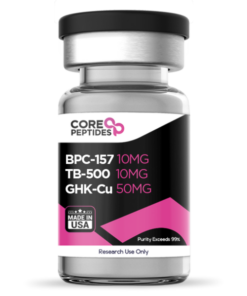
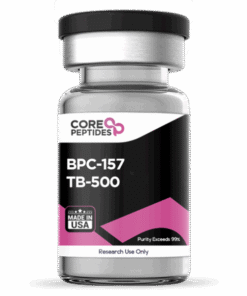
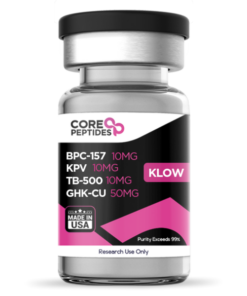
Researchers may investigate peptides associated with VEGF-related signaling, VEGFR pathways, endothelial responses, and angiogenesis. BPC-157, for example, has appeared in preclinical research involving vascular signaling and tissue-injury models.
When a regeneration blend contains a peptide associated with vascular biology, researchers should evaluate the relevant compound individually before interpreting the combined formulation.
Cell Migration and Cytoskeletal Research
Cell migration depends on coordinated changes in the cytoskeleton, cellular adhesion, and interactions with the surrounding extracellular environment.
Research involving thymosin beta-4 and related peptide sequences has examined actin binding, cytoskeletal organization, and cellular migration. Therefore, peptides associated with actin biology may form part of research strategies focused on cellular movement and tissue remodeling.
Inflammatory Signaling Research
Inflammatory pathways influence many aspects of cellular biology. Researchers commonly investigate signaling networks such as NF-κB and MAPK when studying inflammatory responses.
KPV, for example, has been investigated in experimental models involving inflammatory signaling and cytokine responses. GHK-Cu has also appeared in research involving inflammation and oxidative stress.
As a result, regeneration-focused blends may overlap with broader inflammation research. Researchers should examine the individual peptide components and the specific biological endpoint under investigation.
Extracellular Matrix Research
The extracellular matrix provides structural and biochemical support to cells. It contains proteins and molecules involved in tissue organization, cell adhesion, and remodeling.
GHK-Cu is a copper-binding peptide that has received research attention in connection with extracellular matrix biology, collagen-related processes, gene expression, and cellular regulation.
Including an extracellular-matrix-focused peptide within a research blend can therefore support experimental investigation into the relationship between cellular signaling and tissue structure.
Cellular Protection and Stress Research
Cells respond to oxidative stress, inflammatory signals, metabolic changes, and other environmental challenges. Researchers investigate these responses to understand cellular adaptation and protection mechanisms.
ARA-290, for example, has been studied in experimental models involving inflammatory signaling and cellular protection. Its research profile differs from peptides primarily associated with vascular or extracellular matrix pathways.
How Regeneration Blends Differ From Individual Peptides
| Individual Peptide | Regeneration Blend |
|---|---|
| Focuses on one peptide sequence | Contains multiple peptide components |
| Usually targets a narrower research question | May support investigation of multiple biological pathways |
| Easier to attribute an observation to one compound | Requires careful interpretation of component interactions |
| Analytical characterization focuses on one compound | Researchers should evaluate the complete formulation |
| Useful for pathway-specific experiments | Useful for research questions involving multiple pathways |
Neither approach is automatically superior. Instead, the appropriate choice depends on the experimental question, study design, and available analytical information.
How to Evaluate a Regeneration Blend
Because blends contain multiple compounds, researchers should take a systematic approach when evaluating quality. The following factors are particularly important.
1. Complete Formulation
Start by identifying every peptide contained in the blend. The product information should clearly state the formulation rather than relying on a general description such as “regeneration blend.”
2. Peptide Identity
Each component should have a clearly defined identity and, where appropriate, sequence information. This allows researchers to compare the formulation with relevant scientific literature.
3. Individual Component Information
Researchers should understand the role and evidence level of each peptide separately. This approach prevents broad claims about the blend from replacing compound-specific scientific evaluation.
4. Analytical Documentation
A Certificate of Analysis can provide useful information about the tested batch. Depending on the formulation, documentation may include purity, identity testing, analytical methods, batch number, and testing date.
5. Batch Traceability
Every research product should have appropriate batch or lot identification. Traceability makes it easier to connect experimental material with the relevant analytical documentation.
6. Storage Requirements
Different peptide formulations can have different stability characteristics. Therefore, researchers should follow the storage conditions supplied for the specific blend rather than applying a universal storage rule.
7. Research-Use Positioning
Researchers should clearly distinguish laboratory research products from approved medicinal products. A research blend should not be presented as a treatment or as evidence of a clinical outcome.
How to Read a Certificate of Analysis for a Regeneration Blend
A Certificate of Analysis provides batch-specific analytical information. When reviewing a regeneration blend, researchers should check whether the documentation clearly identifies the product and the tested batch.
- Product name: Confirms the formulation covered by the document.
- Batch or lot number: Links the CoA to the specific research material.
- Peptide composition: Identifies the components included in the formulation.
- Purity information: Provides analytical information about peptide components where reported.
- Identity testing: May include analytical techniques such as mass spectrometry.
- Testing methods: Shows how the reported analytical results were generated.
- Testing date: Indicates when the batch underwent analysis.
However, a CoA does not establish biological efficacy or guarantee a particular experimental outcome. Researchers should interpret analytical results alongside the scientific literature and their own experimental design.
Buying Regeneration Blends in Switzerland
Researchers searching for Regeneration Blends in Switzerland should evaluate both the formulation and the supplier. A commercially useful research product page should make it easy to understand what the blend contains, what research areas its components relate to, and what analytical documentation is available.
At Core Peptides, Regeneration Blends are positioned within the broader Healing & Regeneration Peptides research category. This organization makes it easier to move from individual peptides to combination-focused research products.
Before purchasing, researchers should review the individual product information, available CoA documentation, storage requirements, and research-use conditions. In addition, laboratories should confirm that procurement, importation, storage, and use comply with applicable Swiss and European requirements.
For Switzerland-specific regulatory information, researchers can consult Swissmedic. For European medicinal-product information, consult the European Medicines Agency (EMA).
Who May Research Regeneration Peptide Blends?
Regeneration blends may be relevant to laboratories and researchers studying multiple aspects of cellular and tissue biology. Depending on the formulation, research applications may include:
- Cellular signaling research
- Regenerative biology research
- Vascular biology
- Inflammatory pathway research
- Extracellular matrix studies
- Cell migration research
- Antimicrobial and host-defense research
- Preclinical tissue biology
The appropriate research application depends on the specific peptide combination. Therefore, researchers should review the formulation before determining whether a blend fits their experimental model.
Regeneration Blends vs. Single-Peptide Research
Single-peptide research offers a straightforward way to study one compound and its associated mechanisms. In contrast, a blend introduces several variables at the same time.
This distinction can be important for experimental design. When researchers need to identify the effect of one specific peptide, an individual compound may provide a simpler experimental system. Conversely, when the research question concerns interactions between several biological pathways, a blend may provide a different experimental framework.
Ultimately, the best approach depends on the hypothesis, controls, analytical methods, and biological model.
Frequently Asked Questions About Regeneration Blends
What are Regeneration Blends?
Regeneration Blends are research formulations containing multiple peptides associated with areas such as cellular signaling, tissue biology, inflammation, vascular research, and extracellular matrix processes.
What are regeneration peptide blends researched for?
Researchers may investigate them in relation to cellular signaling, angiogenesis, cell migration, inflammatory pathways, extracellular matrix biology, and cellular protection. The specific research focus depends on the peptides contained in each formulation.
Are Regeneration Blends better than individual peptides?
Not necessarily. A single peptide can provide a more controlled experimental variable, while a blend can support research involving multiple pathways. The appropriate choice depends on the research question.
Can a regeneration blend be considered a treatment?
No. Research-use peptide blends should not be represented as treatments or as evidence of clinical efficacy. Experimental findings require appropriate validation before any clinical conclusions can be drawn.
What should I check before buying a regeneration blend?
Review the complete formulation, peptide identities, analytical documentation, batch information, storage requirements, research-use status, and applicable regulatory requirements.
Does a Certificate of Analysis prove that a regeneration blend works?
No. A CoA provides analytical information about a batch. It does not establish biological efficacy, clinical effectiveness, or a guaranteed experimental result.
How should regeneration blends be stored?
Storage requirements vary according to formulation and peptide stability. Researchers should follow the product-specific storage instructions provided with the material.
Are regeneration blends available for research in Switzerland?
Research products may be available to laboratories in Switzerland depending on the product, supplier, and applicable requirements. Researchers should verify the specific product documentation and regulatory conditions before ordering.
Related Research Categories
Healing & Regeneration Peptides — Explore individual peptides researched in tissue biology, cellular signaling, inflammation, vascular research, and regeneration.
Cellular Research & Signaling — Explore peptides associated with cellular pathways, receptors, molecular signaling, and intracellular research.
Immunity & Inflammation Peptides — Explore research compounds associated with inflammatory signaling, innate immunity, and host-defense pathways.
Growth Hormone Peptides — Explore peptides researched in connection with growth hormone signaling and related biological pathways.
Research Disclaimer
The information provided on this page is for educational and research purposes only. Regeneration Blends and the peptides they contain should not be represented as products for diagnosing, treating, curing, or preventing disease.
Scientific evidence varies between individual peptides and experimental models. In vitro and preclinical findings do not automatically establish safety or efficacy in humans. Researchers should evaluate the scientific literature, product documentation, analytical data, and applicable regulatory requirements before conducting research.
Core Peptides does not provide medical advice and does not claim that research-use peptide blends are suitable for human therapeutic use.
Healing & Regeneration Peptides
Healing & Regeneration Peptides
Healing & Regeneration Peptides