
Melanotan & Pigmentation Peptides for Research
Melanotan & Pigmentation Peptides are research compounds studied in areas such as melanogenesis, melanocortin receptor signaling, melanin production, pigmentation biology, and cellular responses to melanocortin-related peptides. This research field provides laboratories with useful models for investigating how peptide signals influence melanocytes and pigment-related pathways.
At Core Peptides, the Melanotan & Pigmentation Peptides category focuses on research compounds associated with pigmentation and melanocortin biology. The category can be relevant to researchers studying MC1R signaling, melanogenesis, melanin synthesis, pigment-cell biology, and related cellular pathways.
For researchers looking to buy Melanotan & Pigmentation Peptides in Switzerland, product selection should begin with the scientific research question. Researchers should also review peptide identity, sequence, analytical purity, batch documentation, storage requirements, and the intended research-use status of each compound.
What Are Melanotan & Pigmentation Peptides?
Melanotan and pigmentation peptides are synthetic or peptide-based research compounds investigated for their relationship with melanocortin signaling and pigment biology. Some compounds are structurally related to alpha-melanocyte-stimulating hormone (α-MSH), a naturally occurring peptide involved in several melanocortin pathways.
Melanocortin receptors are G protein-coupled receptors that participate in different biological processes. Among them, the melanocortin-1 receptor, commonly known as MC1R, has a central role in pigmentation research because of its relationship with melanocyte activity and eumelanin production.
However, melanocortin biology extends beyond pigmentation. Different receptors, peptide structures, cell types, and experimental conditions can produce different biological responses. Therefore, researchers should evaluate each peptide according to its specific molecular profile.
What Are Melanotan & Pigmentation Peptides Researched For?
Researchers investigate pigmentation-related peptides across several areas of molecular and cellular biology.
| Research Area | What Researchers Study | Key Concepts |
|---|---|---|
| Melanogenesis | Cellular production and regulation of melanin | Melanin, melanocytes, tyrosinase |
| MC1R Signaling | Melanocortin receptor activity in pigment cells | MC1R, cAMP, PKA |
| Melanin Synthesis | Enzymatic pathways involved in pigment production | Tyrosinase, TYRP1, DCT |
| Melanocyte Biology | Cellular behavior and signaling in pigment-producing cells | Melanocytes, melanosomes |
| Melanocortin Research | Interactions between melanocortin peptides and receptors | α-MSH, MC1R, MC3R, MC4R, MC5R |
| Pigmentation Genetics | Relationships between receptor activity, signaling, and pigmentation phenotypes | MC1R variants and pigmentation pathways |
| Cellular Signaling | Intracellular responses following receptor activation | cAMP, PKA, CREB |
Because melanocortin pathways participate in more than pigmentation, this research area can overlap with broader Cellular Research & Signaling. Researchers can also explore other peptide categories when their work involves inflammation, cellular regulation, or tissue biology.
Understanding Melanogenesis Research
Melanogenesis describes the biological process through which melanocytes produce melanin. Researchers study this process to understand how pigment cells respond to hormones, peptides, ultraviolet radiation, genetic variation, and intracellular signaling.
Melanin exists in different forms, with eumelanin and pheomelanin representing two major pigment types. Their relative production contributes to differences in pigmentation biology.
Melanocortin signaling provides one important regulatory pathway. When researchers examine this pathway, they may measure receptor activity, intracellular signaling, enzyme expression, melanin content, or changes in melanocyte behavior.
MC1R and Melanocortin Signaling
The melanocortin-1 receptor (MC1R) is a major research target in pigmentation biology. It is expressed on melanocytes and responds to melanocortin peptides such as α-MSH.
MC1R activation can increase intracellular cyclic AMP (cAMP), which can then activate downstream signaling involving protein kinase A (PKA) and transcriptional regulators such as CREB.
These signaling events can influence the expression of proteins involved in melanin synthesis. Consequently, MC1R provides researchers with an important molecular framework for studying pigmentation.
MC1R and Eumelanin Research
MC1R signaling is strongly associated with pathways that promote eumelanin production. Researchers can therefore use melanocortin models to investigate the molecular factors that influence the balance between eumelanin and pheomelanin.
Genetic variation in MC1R can also influence pigmentation phenotypes. For this reason, MC1R research connects peptide signaling with genetics, molecular biology, and pigment-cell research.
Key Research Areas in Melanotan & Pigmentation
Melanocyte Biology
Melanocytes are specialized cells responsible for producing melanin. Researchers investigate their development, signaling, morphology, melanosome formation, and interactions with surrounding cells.
Melanocortin peptides provide experimental tools for studying how receptor activation influences melanocyte signaling and pigment production.
Melanin Production
Melanin synthesis involves several enzymes and intracellular pathways. Tyrosinase is particularly important because it catalyzes key steps in melanin biosynthesis.
Researchers may therefore measure tyrosinase activity, TYRP1 expression, DCT expression, melanin content, or related molecular markers when studying pigmentation pathways.
cAMP and PKA Signaling
Intracellular cAMP is an important signaling molecule downstream of several G protein-coupled receptors. In melanocytes, MC1R signaling can increase cAMP and activate downstream protein kinase A pathways.
Researchers can examine these pathways to better understand how melanocortin peptides influence cellular responses.
Melanosome Biology
Melanosomes are specialized organelles within melanocytes where melanin is synthesized and stored. Their formation, maturation, transport, and transfer to surrounding keratinocytes represent important areas of pigmentation research.
Consequently, pigmentation research can extend beyond melanin synthesis itself to include intracellular trafficking and cell-to-cell interactions.
Pigmentation Genetics
Genetic variation contributes significantly to pigmentation biology. Researchers study genes associated with melanocortin signaling, melanin synthesis, melanosome function, and pigment-cell development.
MC1R is particularly important in this field because different receptor variants can alter melanocortin signaling and influence pigmentation phenotypes.
Melanotan Peptides and Research
Melanotan compounds are synthetic peptide analogues associated with melanocortin research. Researchers have studied these compounds to investigate receptor activity, melanogenesis, and related cellular pathways.
However, individual melanotan compounds can differ in sequence, receptor selectivity, formulation, and research history. Therefore, the name of a peptide alone does not provide enough information to determine its biological profile.
Researchers should review the exact compound, sequence, analytical documentation, published evidence, and experimental context before using a melanotan peptide in laboratory research.
Melanotan I and Melanocortin Research
Melanotan I is a synthetic analogue related to α-MSH and has been investigated in melanocortin and pigmentation research.
Research involving melanotan I has examined melanocortin receptor activity and pigmentation-related biological responses. However, researchers should distinguish laboratory research from regulatory authorization and approved clinical applications.
When evaluating melanotan-related research, the receptor profile, experimental model, study endpoint, and peptide characterization all deserve careful consideration.
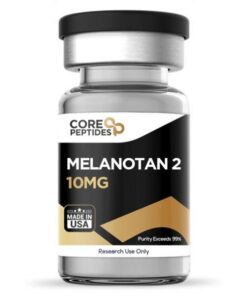
Melanotan II and Receptor Research
Melanotan II is another synthetic melanocortin analogue studied in receptor and pigmentation research. Its research profile differs from compounds that primarily focus on pigmentation because melanocortin receptors participate in multiple biological systems.
Researchers therefore study melanotan II in the context of receptor pharmacology, melanogenesis, cellular signaling, and other melanocortin-related biological processes.
Because melanocortin receptors have diverse functions, experimental findings should always be interpreted according to the specific receptor, model, and endpoint being studied.
Melanocortin Receptors in Pigmentation Research
| Receptor | Research Relevance | Associated Research Areas |
|---|---|---|
| MC1R | Central receptor in melanocyte and pigmentation research | Melanogenesis, eumelanin, cAMP signaling |
| MC2R | Adrenocorticotropic hormone receptor | Adrenal signaling and endocrine research |
| MC3R | Melanocortin receptor involved in broader physiological research | Energy balance and signaling research |
| MC4R | Widely studied melanocortin receptor | Neurobiology and metabolic signaling |
| MC5R | Melanocortin receptor expressed in several tissues | Cellular and endocrine research |
This receptor diversity explains why melanocortin research extends well beyond pigmentation. Consequently, researchers should identify the receptor and pathway relevant to their specific experiment.
How Do Pigmentation Peptides Work?
The biological mechanisms of melanocortin peptides depend on their structure and receptor interactions. However, several pathways are particularly important in pigmentation research.
1. Receptor Binding
Melanocortin peptides can interact with melanocortin receptors. The strength and selectivity of these interactions depend on the peptide structure and receptor being studied.
2. cAMP Signaling
MC1R activation can stimulate intracellular cAMP production. Researchers frequently use cAMP measurements to investigate melanocortin receptor activity.
3. PKA Activation
Increased cAMP can activate protein kinase A. This pathway can influence transcriptional regulators involved in melanocyte function and pigment production.
4. MITF Regulation
Microphthalmia-associated transcription factor, or MITF, is a major regulator of melanocyte development and pigment-related gene expression.
Research into the MC1R-cAMP pathway has examined how melanocortin signaling influences MITF and downstream melanogenic genes.
5. Tyrosinase Activity
Tyrosinase plays a central role in melanin biosynthesis. Researchers may measure its activity or expression when evaluating pigmentation-related compounds.
6. Melanosome Formation
Melanin production occurs within melanosomes. Therefore, researchers can also investigate melanosome maturation, transport, and distribution when studying pigment-cell biology.
Molecular Pathways in Pigmentation Research
| Pathway or Target | Research Role | Relevant Research Area |
|---|---|---|
| MC1R | Melanocortin receptor signaling | Melanocyte activity and pigmentation |
| cAMP | Intracellular second messenger | MC1R downstream signaling |
| PKA | cAMP-dependent protein kinase | Signal transduction |
| CREB | Transcriptional regulator | cAMP-responsive gene expression |
| MITF | Major melanocyte transcription factor | Melanocyte development and melanogenesis |
| Tyrosinase | Key enzyme in melanin synthesis | Melanin production |
| TYRP1 | Melanogenesis-associated protein | Pigment synthesis |
| DCT | Melanogenesis-associated enzyme | Melanin pathway research |
What Does the Scientific Research Say?
Cell-Based Research
Cell-based models provide researchers with controlled systems for studying melanocortin signaling. Melanocyte cultures can be used to examine receptor activation, cAMP production, gene expression, enzyme activity, and melanin production.
These models can help researchers isolate specific mechanisms. However, results from cultured cells do not automatically reproduce the complexity of whole-organism biology.
Preclinical Research
Animal and other preclinical models can provide additional information about melanocortin signaling and pigmentation biology. Researchers may examine changes in pigmentation, receptor responses, molecular markers, and tissue-level effects.
Nevertheless, preclinical observations require careful interpretation. Species differences, receptor distribution, peptide metabolism, experimental design, and endpoint selection can all influence the results.
Human Research
Some melanocortin-related compounds have been investigated in human research. However, the existence of human studies does not mean that every melanotan compound is an approved medicine or suitable for general human use.
Researchers should therefore distinguish between published human research, regulatory authorization, and laboratory research products.
Why Evidence Level Matters
Scientific evidence should be evaluated according to study quality and relevance. A laboratory result can demonstrate a molecular interaction without establishing a clinical effect.
For this reason, researchers should consider the experimental model, sample size, controls, analytical methods, reproducibility, and independent confirmation when assessing pigmentation research.
How to Evaluate Melanotan & Pigmentation Peptide Quality
Analytical quality matters when working with peptides in pigmentation research. Before purchasing a research compound, researchers should evaluate several factors.
Peptide Identity
The product should clearly identify the peptide and, where appropriate, its amino acid sequence. Identity testing can provide additional evidence that the supplied material corresponds to the stated compound.
Purity
HPLC is commonly used to assess peptide purity. However, purity alone does not confirm sequence accuracy, biological activity, sterility, endotoxin status, or suitability for every experimental model.
Mass Spectrometry
Mass spectrometry can support molecular-weight and identity assessment. Researchers should review the analytical information available for the specific batch rather than relying solely on a stated purity value.
Certificate of Analysis
A batch-specific Certificate of Analysis can provide useful information about analytical testing. Depending on the product, the document may include purity, identity, analytical methods, batch information, and testing dates.
Batch Traceability
A clearly identified lot or batch helps researchers connect the experimental material with its analytical documentation. This information also supports reproducibility across laboratory work.
Storage Requirements
Peptide stability can depend on sequence, formulation, moisture, temperature, and handling. Therefore, researchers should follow the storage conditions supplied for the specific peptide instead of applying one universal storage method.
How to Read a Certificate of Analysis
A Certificate of Analysis provides analytical information about a particular peptide batch. Researchers should review the document carefully before using the material in an experiment.
- Product name: Identifies the compound covered by the CoA.
- Peptide sequence: Provides sequence information where applicable.
- Batch or lot number: Connects the CoA to the specific material.
- Purity: Reports the analytical purity result.
- Identity testing: May include mass spectrometry or another analytical method.
- Testing method: Identifies how the reported result was generated.
- Testing date: Indicates when the analysis took place.
A CoA supports analytical transparency, but it does not establish biological efficacy or guarantee a particular experimental result.
Buying Melanotan & Pigmentation Peptides in Switzerland
Researchers looking to buy Melanotan & Pigmentation Peptides in Switzerland should consider scientific documentation alongside the product itself. A suitable research supplier should provide clear product information and make it possible to understand the compound being supplied.
Before purchasing, researchers should review the peptide identity, formulation, available analytical documentation, batch information, storage requirements, and research-use conditions.
At Core Peptides, this category provides a focused starting point for laboratories investigating melanocortin signaling and pigmentation biology. Researchers can also explore Cellular Research & Signaling for related molecular and receptor-focused research compounds.
Swiss and European Regulatory Considerations
Research-use peptides and authorized medicinal products have different regulatory contexts. Therefore, researchers should not assume that a peptide marketed for laboratory research has authorization as a medicine or approval for human use.
Melanotan-related compounds are particularly important to evaluate carefully because products marketed online can be associated with claims that extend beyond established research evidence.
For Switzerland-specific regulatory information, researchers can consult Swissmedic. For European medicinal-product information, consult the European Medicines Agency (EMA).
Researchers remain responsible for confirming the requirements that apply to their institution, laboratory, procurement process, importation, storage, and intended research.
How to Choose a Melanotan Research Peptide
The most appropriate pigmentation research peptide depends on the experimental question. Researchers can use the following framework when comparing compounds.
- Define the research objective: Determine whether the study focuses on melanogenesis, receptor pharmacology, melanin synthesis, melanocyte biology, or another pathway.
- Identify the receptor: Establish whether MC1R or another melanocortin receptor is relevant to the research question.
- Review the peptide structure: Examine the sequence and molecular characteristics of the compound.
- Review the evidence: Separate cell-based, animal, and human research.
- Check analytical documentation: Review purity, identity, sequence information, and available mass-spectrometry data.
- Verify batch traceability: Confirm that the supplied material connects to a specific lot and CoA.
- Review storage information: Follow the documented conditions for the specific peptide.
- Confirm research-use requirements: Ensure that procurement and laboratory use comply with applicable requirements.
Melanotan & Pigmentation Research Glossary
Melanogenesis: The biological process through which melanocytes produce melanin.
Melanocyte: A specialized cell responsible for producing melanin pigment.
Melanin: A group of pigments produced by melanocytes that contribute to pigmentation.
Eumelanin: A dark form of melanin associated with brown and black pigmentation.
Pheomelanin: A lighter sulfur-containing form of melanin associated with yellow, red, and related pigmentation.
MC1R: Melanocortin-1 receptor, an important receptor in melanocyte and pigmentation research.
α-MSH: Alpha-melanocyte-stimulating hormone, a naturally occurring melanocortin peptide involved in several biological pathways.
cAMP: A second messenger involved in intracellular signaling downstream of several G protein-coupled receptors.
PKA: Protein kinase A, a cAMP-dependent enzyme involved in cellular signal transduction.
MITF: Microphthalmia-associated transcription factor, an important regulator of melanocyte biology and melanogenic gene expression.
Tyrosinase: An enzyme that catalyzes key reactions involved in melanin biosynthesis.
Melanosome: A specialized organelle within melanocytes where melanin is synthesized and stored.
Frequently Asked Questions About Melanotan & Pigmentation Peptides
What are Melanotan & Pigmentation Peptides?
Melanotan and pigmentation peptides are research compounds investigated in relation to melanocortin receptors, melanogenesis, melanin synthesis, melanocyte biology, and cellular signaling.
What are pigmentation peptides researched for?
Researchers study pigmentation peptides to investigate processes such as melanocortin receptor signaling, melanin production, melanocyte activity, melanosome biology, and pigmentation-related gene expression.
What is MC1R?
MC1R is the melanocortin-1 receptor, a G protein-coupled receptor expressed on melanocytes. It plays an important role in research involving melanocortin signaling and pigmentation.
What is melanogenesis?
Melanogenesis is the biological process through which melanocytes produce melanin. Researchers study this process by examining signaling pathways, enzymes, transcription factors, and pigment production.
What is the relationship between α-MSH and pigmentation?
α-MSH is a naturally occurring melanocortin peptide that can activate melanocortin receptors. MC1R signaling is particularly relevant to melanocyte activity and pigmentation research.
What is Melanotan I?
Melanotan I is a synthetic melanocortin-related peptide that has been studied in research involving receptor signaling and pigmentation biology.
What is Melanotan II?
Melanotan II is a synthetic melanocortin analogue investigated in receptor pharmacology, pigmentation research, and other melanocortin-related biological studies.
What is the difference between melanogenesis and pigmentation?
Melanogenesis refers specifically to the biological process of producing melanin, while pigmentation describes the broader biological outcome involving pigment production, distribution, and related cellular processes.
How is pigmentation peptide purity tested?
HPLC is commonly used to assess peptide purity, while mass spectrometry can provide additional information about molecular mass and identity.
Does peptide purity prove biological activity?
No. Purity is only one component of peptide characterization. Biological activity can depend on sequence accuracy, formulation, receptor interactions, experimental conditions, and other factors.
What is a Certificate of Analysis?
A Certificate of Analysis is a batch-specific analytical document that reports testing information for a research product. Depending on the supplier, it may include purity, identity, analytical methods, batch information, and testing dates.
Are Melanotan peptides approved medicines?
Regulatory status depends on the specific compound and jurisdiction. Researchers should not assume that a peptide sold for research purposes has authorization as a medicine or approval for human use.
Can Melanotan peptides be used for tanning?
This category is intended for research purposes. Products presented as research compounds should not be marketed as tanning products or as treatments for pigmentation-related conditions.
What should I look for when buying pigmentation peptides in Switzerland?
Researchers should look for clear peptide identification, transparent specifications, analytical documentation, batch traceability, appropriate storage information, research-use positioning, and supplier transparency.
Related Peptide Research Categories
Cellular Research & Signaling — Explore peptides associated with receptors, intracellular pathways, molecular signaling, and cellular regulation.
Anti-Aging & Longevity Peptides — Explore research compounds associated with cellular maintenance, oxidative stress, aging biology, and longevity-related pathways.
Skin, Hair & Beauty Peptides — Explore peptides researched in connection with skin biology, hair biology, extracellular matrix processes, and related cellular pathways.
Immunity & Inflammation Peptides — Explore research compounds associated with inflammatory signaling, immune pathways, and cellular responses.
Research Disclaimer
The information provided on this page is intended for educational and research purposes only. Products within the Melanotan & Pigmentation Peptides category are presented as research compounds and should not be represented as products for diagnosing, treating, curing, or preventing disease.
Scientific evidence varies between compounds, experimental models, and biological endpoints. Laboratory and preclinical findings do not automatically establish safety or efficacy in humans. Researchers should evaluate the scientific literature, product documentation, analytical data, and applicable regulatory requirements before conducting research.
Core Peptides does not provide medical advice and does not claim that research-use melanotan or pigmentation peptides are suitable for human therapeutic or cosmetic use.

Melanotan & Pigmentation
Melanotan & Pigmentation
Melanotan & Pigmentation