
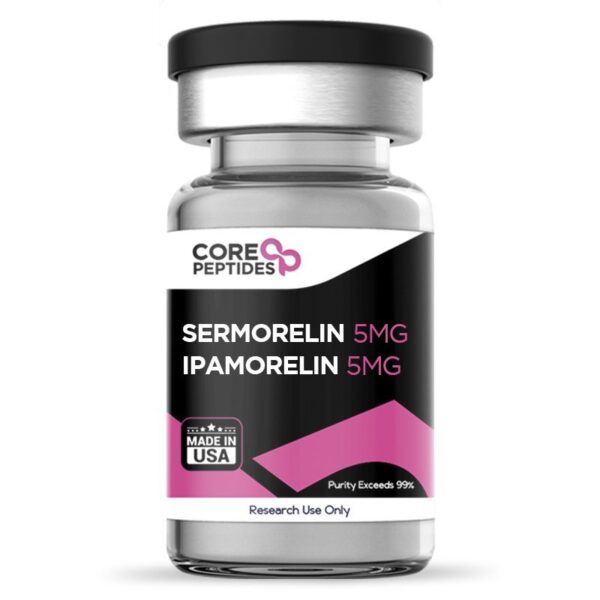
Sermorelin & Ipamorelin Blend (10MG)
CHF 72.00
Sermorelin & Ipamorelin Blend is a 10mg research peptide combination containing Sermorelin (5mg), a synthetic GHRH(1-29) analog, and Ipamorelin (5mg), a highly selective ghrelin receptor agonist. Researchers investigate this blend for synergistic amplification of growth hormone release through complementary pituitary pathways Sermorelin activates GHRH receptors via the cAMP/PKA cascade, while Ipamorelin targets GHS-R1a via the PLC/IP3/DAG pathway. Ipamorelin is the most selective ghrelin receptor agonist known, activating GHS-R1a without significantly affecting cortisol, prolactin, or ACTH levels at research doses. Available for laboratory research purposes only. Buy Sermorelin & Ipamorelin Blend in Switzerland from Core Peptides, a trusted research peptide supplier.
What Is the Sermorelin & Ipamorelin Blend?
The Sermorelin & Ipamorelin Blend is a 10mg research peptide formulation combining two complementary growth hormone secretagogues: Sermorelin (5mg), a synthetic 29-amino acid GHRH analog corresponding to the biologically active N-terminal fragment of endogenous growth hormone-releasing hormone (GHRH 1-29), and Ipamorelin (5mg), a highly selective synthetic pentapeptide ghrelin receptor agonist. For those looking to buy Sermorelin & Ipamorelin Blend in Switzerland, Core Peptides offers high-quality research-grade material for laboratory applications.
This blend pairs a GHRH analogue with a selective ghrelin receptor agonist, studied for synergistic amplification of growth hormone release through dual pituitary receptor pathway activation. Notably, Ipamorelin is the most specific and selective ghrelin receptor agonist known, activating GHS-R1a without significantly affecting cortisol, prolactin, or ACTH levels at research doses. This selectivity distinguishes the Sermorelin/Ipamorelin combination from blends using less selective GHRPs such as GHRP-6 or GHRP-2.
Research Overview
The Sermorelin & Ipamorelin Blend has attracted research interest as a dual-pathway approach to investigating growth hormone axis physiology. Sermorelin, the shortest functional GHRH analog containing the first 29 amino acids of endogenous GHRH, retains full affinity for GHRH receptors on pituitary cells. Meanwhile, Ipamorelin is a pentapeptide categorized as a selective growth hormone secretagogue that interacts with ghrelin receptors in the anterior pituitary.
Research interest in this blend centers on the synergistic interaction between these two pathways. Their distinct mechanisms of action may complement each other, potentially amplifying growth hormone release and its downstream impacts on cellular functions. Furthermore, the peptides’ potential to target different receptors and pathways may provide a holistic approach to understanding growth hormone dynamics in research models. Consequently, this blend has generated significant interest as a research tool for investigating growth hormone physiology, pituitary function, and the hypothalamic-pituitary-somatotroph axis.
When researchers choose to buy Sermorelin & Ipamorelin Blend in Switzerland for laboratory studies, they gain access to a compound that may help elucidate mechanisms of synergistic GH secretion, dual GPCR signaling convergence, and growth hormone regulation at the molecular level.
How Does the Blend Work?
The Sermorelin & Ipamorelin Blend exerts its biological effects through simultaneous activation of two distinct pituitary receptor pathways that converge on somatotroph cells to amplify growth hormone release.
Sermorelin: GHRH Receptor Activation
Sermorelin mimics endogenous GHRH by binding to the GHRH receptor (GHRH-R) on anterior pituitary somatotrophs. This class B GPCR activates the Gs/adenylyl cyclase/cAMP/PKA cascade. PKA then phosphorylates L-type calcium channels and the CREB transcription factor. This simultaneously triggers acute GH release and stimulates GH gene transcription. Importantly, this preserves normal GH pulsatility and feedback regulation. Furthermore, Sermorelin supports physiological rhythmicity, aligning with natural oscillatory secretion patterns observed in endocrine signaling.
Ipamorelin: Ghrelin Receptor Activation
Ipamorelin acts as an agonist of the ghrelin receptor, also known as the growth hormone secretagogue receptor (GHS-R1a). This Gq-coupled receptor activates phospholipase C (PLC), which hydrolyzes phosphatidylinositol 4,5-bisphosphate (PIP2) into inositol trisphosphate (IP3) and diacylglycerol (DAG). IP3 then mobilizes endoplasmic reticulum calcium stores, releasing Ca²⁺ into the cytoplasm. Meanwhile, DAG activates protein kinase C (PKC), which interacts with protein synthesis related to GH synthesis.
Researchers have identified Ipamorelin as the first GHRP-receptor agonist with a selectivity for GH release similar to that displayed by GHRH. Unlike earlier compounds in its category, Ipamorelin appears to display a more targeted interaction profile, minimizing engagement with other endocrine pathways. Moreover, research indicates that Ipamorelin may stimulate growth hormone release through a mechanism distinct from GHRH analogs, thereby offering a complementary signaling route.
Synergistic Amplification
The blend exploits dual signaling convergence on somatotroph calcium levels. Specifically, Sermorelin-mediated cAMP/PKA signaling sensitizes voltage-gated calcium channels. At the same time, Ipamorelin-mediated IP₃/PKC signaling mobilizes intracellular calcium. The convergent activation of these two distinct receptor systems on the same somatotroph cell produces synergistic GH pulse amplification.
When researchers administer these peptides together, they stimulate the pituitary gland through two different pathways, resulting in a significantly amplified and more sustained release of growth hormone compared to either peptide alone. Importantly, this dual mechanism preserves the physiological pulsatile pattern of GH release and maintains negative feedback via IGF-1 and somatostatin, distinguishing it from exogenous GH administration. Rather than producing a linear increase in hormone levels, the blend supports a pattern that more closely resembles endogenous secretion cycles.
Researchers who buy Sermorelin & Ipamorelin Blend in Switzerland for research purposes can investigate these mechanisms across diverse experimental models of growth hormone physiology and pituitary function.
Why Is This Blend Studied?
Researchers study the Sermorelin & Ipamorelin Blend primarily for its potential relevance to growth hormone physiology, pituitary function, and the hypothalamic-pituitary-somatotroph axis. The synergistic amplification of GH release through complementary pathways makes it a valuable tool for understanding the molecular basis of GH regulation.
One area of interest surrounding this peptide blend involves its potential role in studying intracellular signaling cascades. For example, growth hormone release is intricately tied to pathways such as the JAK-STAT signaling axis, as well as downstream mediators like insulin-like growth factor 1 (IGF-1). While Sermorelin and Ipamorelin do not directly interact with these downstream components, their upstream modulation may influence how these pathways activate over time.
Additionally, the blend has drawn attention in investigations related to metabolic adaptability. By modulating GH release patterns, Sermorelin and Ipamorelin seem to indirectly influence how an organism allocates energy resources under varying conditions. Research indicates that pulsatile GH signaling might associate with shifts in substrate utilization, potentially favoring lipid mobilization over carbohydrate reliance.
Another dimension of exploration involves tissue remodeling and structural protein turnover. Growth hormone signaling is closely linked to processes such as collagen synthesis and extracellular matrix regulation. Consequently, the blend’s hypothesized potential to impact protein synthesis and cellular proliferation may provide a foundation for exploring how cellular aging impacts tissue repair and regeneration.
Researchers who buy Sermorelin & Ipamorelin Blend in Switzerland from Core Peptides can incorporate this peptide into their studies on GHRH receptor signaling, ghrelin receptor pharmacology, somatotroph function, and growth hormone physiology.
Research Areas
| Research Area | Description |
|---|---|
| Synergistic GH Release | Investigating the combined effects of GHRH and Ipamorelin on GH secretion |
| GHRH Receptor Pharmacology | Studying Sermorelin’s binding and activation of GHRH-R on somatotrophs |
| Ghrelin Receptor (GHS-R1a) Studies | Examining Ipamorelin’s selective activation of the ghrelin receptor |
| cAMP/PKA Signaling | Investigating the cAMP pathway activated by Sermorelin |
| PLC/IP3/DAG Pathway | Exploring the phospholipase C pathway activated by Ipamorelin |
| Somatotroph Function | Studying the effects of dual pathway activation on pituitary somatotroph cells |
| Growth Hormone Physiology | Exploring pulsatile GH secretion and the hypothalamic-pituitary-somatotroph axis |
| Metabolic Flexibility | Investigating the blend’s effects on lipid metabolism and energy partitioning |
Scientific Research
Researchers have conducted scientific studies on Sermorelin, Ipamorelin, and their combination in both in vitro and in vivo settings. They have derived evidence from cell cultures, preclinical models, and clinical research.
In Vitro Evidence
In vitro studies using pituitary cell cultures have demonstrated that Sermorelin binds to the GHRH receptor on somatotroph cells. This binding activates Gs-protein-coupled adenylyl cyclase and increases intracellular cAMP. Furthermore, Ipamorelin released GH from primary rat pituitary cells with a potency and efficacy similar to GHRP-6.
Researchers identified Ipamorelin within a series of compounds lacking the central dipeptide Ala-Trp of growth hormone-releasing peptide (GHRP)-1. Consequently, ipamorelin is the first GHRP-receptor agonist with a selectivity for GH release similar to that displayed by GHRH.
Preclinical Studies
In animal models, researchers have investigated the effects of Sermorelin and Ipamorelin on growth hormone secretion and pituitary function. For instance, research in swine models demonstrates that Sermorelin (as a GHRH agonist) reduces cardiomyocyte cell death, improves healing following cardiac injury, promotes collateral blood vessel growth, and reduces inflammation.
Researchers have also identified a form of the ghrelin receptor in cardiac tissue, and administration of ghrelin analogues has been shown to reduce arrhythmia risk and improve post-injury cardiac healing.
Human Research
Researchers have studied Sermorelin in human clinical research, and it has been licensed as a diagnostic test for growth hormone secretion. Sermorelin acetate, also known as GHRH (1–29) NH2, is generally well tolerated by elderly individuals, with minimal side effects reported. However, products containing Sermorelin were withdrawn from the United States market by the manufacturer in November 2002.
Nevertheless, researchers should note that this blend is supplied for laboratory research purposes only. Scientists who buy Sermorelin & Ipamorelin Blend in Switzerland should remain aware of these evidence considerations.
Compared With Related Peptides
| Peptide/Blend | Relationship | Key Differences |
|---|---|---|
| Sermorelin Alone | Single component of the blend | Sermorelin alone activates only GHRH-R; the blend adds Ipamorelin for synergistic amplification |
| Ipamorelin Alone | Single component of the blend | Ipamorelin alone activates only GHS-R1a; the blend adds Sermorelin for synergistic amplification |
| Sermorelin & GHRP-2 Blend | Both are GHRH + GHRP blends | GHRP-2 is less selective and may affect cortisol and prolactin; Ipamorelin is highly selective with minimal off-target effects |
| Sermorelin & GHRP-6 Blend | Both are GHRH + GHRP blends | GHRP-6 stimulates appetite and affects multiple pathways; Ipamorelin is more selective for GH release |
| Growth Hormone (GH) | Blend stimulates endogenous GH | GH is direct exogenous administration; the blend stimulates natural pulsatile GH release |
Research Applications
Researchers utilize the Sermorelin & Ipamorelin Blend in a variety of laboratory research applications, primarily in the fields of endocrinology, receptor pharmacology, and growth hormone physiology. Key research applications include:
- Synergistic GH Release Studies: Investigating the combined effects of GHRH and Ipamorelin on GH secretion
- GHRH Receptor Studies: Studying Sermorelin’s binding and activation of GHRH-R on somatotrophs
- Ghrelin Receptor (GHS-R1a) Studies: Examining Ipamorelin’s selective activation of the ghrelin receptor
- cAMP/PKA Signaling Research: Investigating the cAMP pathway activated by Sermorelin
- PLC/IP3/DAG Pathway Research: Exploring the phospholipase C pathway activated by Ipamorelin
- Somatotroph Function Studies: Studying the effects of dual pathway activation on pituitary somatotroph cells
- Growth Hormone Physiology Research: Exploring pulsatile GH secretion and the hypothalamic-pituitary-somatotroph axis
- Metabolic Flexibility Research: Investigating the blend’s effects on lipid metabolism and energy partitioning
Researchers who buy Sermorelin & Ipamorelin Blend in Switzerland can incorporate this peptide into their experimental protocols across these diverse research areas.
Product Specifications
| Specification | Detail |
|---|---|
| Product Name | Sermorelin & Ipamorelin Blend |
| Total Amount | 10mg |
| Contents | Sermorelin (5mg) & Ipamorelin (5mg) |
| Form | Lyophilized powder |
| Purity | >99% (HPLC) |
| Sermorelin Sequence (One-Letter) | YADAIFTNSYRKVLGQLSARKLLQDIMSR-NH2 |
| Sermorelin Molecular Formula | C149H246N44O42S |
| Sermorelin Molecular Weight | Approximately 3,357.9 g/mol |
| Sermorelin CAS Number | 86168-78-7 |
| Ipamorelin Sequence (One-Letter) | Aib-His-D-2Nal-D-Phe-Lys-NH2 |
| Ipamorelin Molecular Formula | C38H49N9O5 |
| Ipamorelin Molecular Weight | Approximately 711.9 g/mol |
| Ipamorelin CAS Number | Not verified / not provided |
| Ipamorelin Synonyms | NNC-26-0161 |
| Half-Life | Sermorelin: 11-12 minutes; Ipamorelin: approximately 2 hours |
| Mechanism | GHRH receptor agonist (Sermorelin) + GHS-R1a agonist (Ipamorelin); synergistic GH release |
| Research Category | Growth Hormone Blends |
| SKU | P-SERMIPAM-10 |
| Storage | Store desiccated at -20°C, protected from light |
How to Evaluate Quality
When sourcing the Sermorelin & Ipamorelin Blend for research purposes, researchers should consider several quality indicators. A reliable Sermorelin & Ipamorelin Blend peptide supplier should provide:
- Identity Confirmation: Analytical verification that both peptides match their expected sequences and molecular weights
- Purity Analysis: Documentation of purity through methods such as HPLC – research grade typically provides >99% purity
- Batch Information: Clear lot numbers and batch traceability
- Certificate of Analysis (CoA): Documentation of analytical testing results
- Proper Labeling: Accurate product identification and storage instructions
- Appearance: White to off-white lyophilized powder
Researchers looking to buy Sermorelin & Ipamorelin Blend in Switzerland should seek suppliers who provide comprehensive documentation and quality assurance. Core Peptides remains committed to supporting research with properly documented products.
Understanding the Certificate of Analysis
A Certificate of Analysis (CoA) provides analytical data for a specific batch of a research peptide. For Sermorelin & Ipamorelin Blend research, a CoA typically includes:
- Identity Confirmation: Mass spectrometry confirming both peptides’ identities
- Purity Assessment: HPLC chromatograms showing the purity of each peptide
- Batch/Lot Information: Unique identifiers for traceability
- Analytical Methods: Description of the testing methods used
Importantly, researchers should understand that a CoA demonstrates the chemical identity and purity of a peptide but does not establish safety, efficacy, therapeutic effectiveness, or suitability for human use. The CoA serves as a quality control document for research purposes only.
Storage and Stability
Proper storage of research peptides is essential for maintaining their integrity and stability. For Sermorelin & Ipamorelin Blend, researchers should refer to the product documentation provided with their order for specific storage recommendations.
General best practices for peptide storage include keeping the lyophilized blend desiccated, protected from light, and stored at -20°C or below. For specific temperature requirements and reconstitution protocols, consult the applicable product documentation or contact Core Peptides for the applicable storage specifications.
Research Considerations
Researchers incorporating the Sermorelin & Ipamorelin Blend into their studies should be aware of several important considerations:
- Clinical Status: Sermorelin has been studied in human clinical research and licensed as a diagnostic test for GH secretion. However, the blend is supplied for laboratory research purposes only.
- Experimental Status: Researchers consider the blend a well-characterized combination, but findings should be interpreted within the context of ongoing research.
- Model Differences: Results from cell cultures and animal models may not translate directly to human outcomes.
- Regulatory Status: Both components are not FDA-approved and are intended for laboratory research use only.
- Quality Considerations: Researchers should verify the quality and identity of their blend through appropriate analytical methods.
- Selectivity Profile: Ipamorelin is distinguished by its high selectivity for GHS-R1a without significant effects on cortisol, prolactin, or ACTH, making this blend the most selective dual-pathway GH secretagogue combination available.
- Half-Life Differences: The half-life of Sermorelin is approximately 11-12 minutes, while Ipamorelin has a half-life of approximately 2 hours, which may influence research design considerations.
Researchers who buy Sermorelin & Ipamorelin Blend in Switzerland should ensure their studies include appropriate controls and interpret findings with scientific rigor.
Frequently Asked Questions
What is the Sermorelin & Ipamorelin Blend?
The Sermorelin & Ipamorelin Blend is a 10mg research peptide combination containing Sermorelin (5mg), a synthetic GHRH(1-29) analog, and Ipamorelin (5mg), a highly selective ghrelin receptor agonist.
What is this blend researched for?
Researchers primarily investigate this blend for synergistic amplification of growth hormone release through dual pituitary receptor pathway activation.
What is the mechanism of action?
Sermorelin activates GHRH receptors via the cAMP/PKA cascade, while Ipamorelin targets GHS-R1a via the PLC/IP3/DAG pathway. Together, they produce synergistic GH release greater than either peptide alone.
What is the molecular weight of each component?
Sermorelin has a molecular weight of approximately 3,357.9 g/mol. Ipamorelin has a molecular weight of approximately 711.9 g/mol.
What are the CAS numbers?
Sermorelin CAS: 86168-78-7.
Is this blend FDA-approved?
This blend is not FDA-approved. It is intended for laboratory research use only and is not approved for human consumption or therapeutic use.
Can I buy the Sermorelin & Ipamorelin Blend in Switzerland?
Yes, researchers can buy Sermorelin & Ipamorelin Blend in Switzerland from Core Peptides for laboratory research purposes.
What is the primary research category for this blend?
This blend belongs to the Growth Hormone Blends category, with secondary relevance to Cellular Research & Signaling.
What related peptides are studied alongside this blend?
Related peptides include Sermorelin alone, Ipamorelin alone, GHRP-2, GHRP-6, CJC-1295, and other growth hormone secretagogues.
What is the purity of Core Peptides’ blend?
Core Peptides provides this blend with a purity of >99% as verified by HPLC analysis.
How should the blend be stored?
The blend should be stored lyophilized, desiccated, protected from light, at -20°C or below.
Does this blend preserve natural GH pulsatility?
Yes, unlike direct GH administration, this blend stimulates the pituitary to produce and secrete GH, preserving the natural pulsatile release pattern and maintaining negative feedback.
What distinguishes Ipamorelin from other GHRPs?
Ipamorelin is the first GHRP-receptor agonist with a selectivity for GH release similar to that displayed by GHRH, without significantly affecting cortisol, prolactin, or ACTH levels.
Related Research Peptides
Researchers interested in the Sermorelin & Ipamorelin Blend may also find the following related peptides relevant to their work:
- Sermorelin – The GHRH analog component, studied for GHRH receptor research
- Ipamorelin – The selective ghrelin receptor agonist component, studied for GHS-R1a research
- GHRP-2 – A more potent but less selective GHRP studied for GH research
- GHRP-6 – A GHRP studied for GH and appetite research with broader effects
- CJC-1295 – A long-acting GHRH analog with Drug Affinity Complex for extended half-life studies
For a comprehensive selection of research peptides in Switzerland, explore the Core Peptides catalog.
Explore Growth Hormone Blends
The Sermorelin & Ipamorelin Blend is part of our Growth Hormone Blends category, which features pre-mixed combinations of research peptides for growth hormone axis studies. Browse our selection to find the right peptides for your laboratory research.
Explore Related Research Categories
Researchers may also find the following related categories relevant to this blend:
- Cellular Research & Signaling – Peptides studied for GPCR signaling and receptor pharmacology
- Growth Hormone Peptides – Individual peptides for growth hormone research
- Anti-Aging & Longevity – Peptides investigated for age-related endocrine research
Further Research
Researchers interested in learning more about the Sermorelin & Ipamorelin Blend and related peptides should consult the primary scientific literature. Key areas of investigation include GHRH receptor biology, ghrelin receptor pharmacology, synergistic GH release, and growth hormone physiology. The PubMed database is an excellent resource for accessing peer-reviewed research articles on these topics.
Research Disclaimer
Core Peptides supplies the Sermorelin & Ipamorelin Blend as a research peptide for laboratory research purposes only. All information provided is for educational and scientific reference purposes only and does not constitute medical advice. Researchers are responsible for ensuring compliance with all applicable laws and regulations governing the use of research peptides in their jurisdiction, including Switzerland.
Be the first to review “Sermorelin & Ipamorelin Blend (10MG)”
You must be logged in to post a review.
Related products
Growth Hormone Blends
Growth Hormone Blends
Growth Hormone Blends
Growth Hormone Blends
Growth Hormone Blends
Growth Hormone Blends
Growth Hormone Peptides
Growth Hormone Peptides
Reviews
There are no reviews yet.