
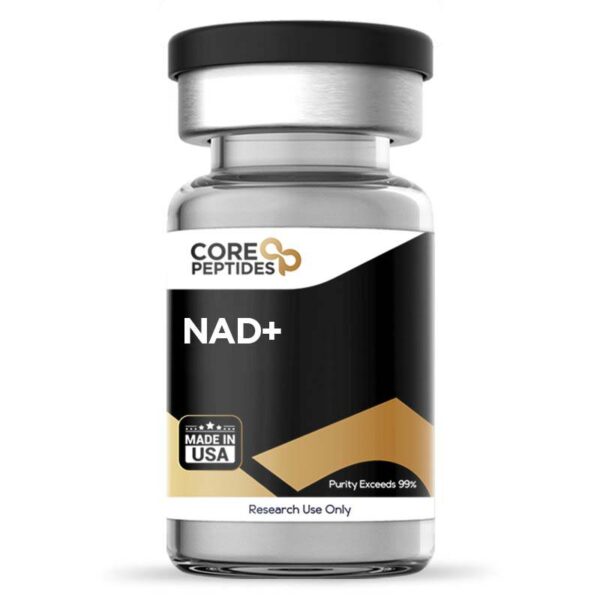
NAD+ (100MG / 250MG / 750MG)

Price range: CHF 42.30 through CHF 262.80
NAD+ (Nicotinamide Adenine Dinucleotide) is a naturally occurring dinucleotide cofactor found in all living cells. This research compound is available in 100mg, 250mg, and 750mg formats and serves as an essential cofactor for hundreds of enzymatic reactions, including redox reactions in cellular metabolism, sirtuin-mediated deacetylation, and PARP-dependent DNA repair. NAD+ plays a central role in glycolysis, the tricarboxylic acid (TCA) cycle, and oxidative phosphorylation, making it a critical molecule for mitochondrial function and cellular energy homeostasis. Researchers study NAD+ for its roles in metabolic regulation, aging, neuroprotection, and mitochondrial health. Buy NAD+ in Switzerland from Core Peptides for your laboratory research needs.
What Is NAD+ and Why Buy It for Research?
Buy NAD+ in Switzerland for research into cellular metabolism, mitochondrial function, and sirtuin-mediated signaling pathways. Specifically, NAD+ (Nicotinamide Adenine Dinucleotide) is a naturally occurring dinucleotide cofactor composed of two nucleotides joined through their phosphate groups. It exists in all living cells and serves as an essential cofactor for hundreds of enzymatic reactions, making it one of the most abundant and critical molecules in cellular metabolism.
NAD+ exists in two forms: the oxidized form (NAD+) and the reduced form (NADH). The NAD+/NADH ratio is a key indicator of cellular redox state and metabolic health. NAD+ serves as an electron carrier in redox reactions, accepting electrons from metabolic intermediates and becoming reduced to NADH. The peptide has a molecular weight of 663.43 g/mol, the molecular formula C₂₁H₂₇N₇O₁₄P₂, and the CAS number 53-84-9.
In scientific research, NAD+ serves as a molecular tool for studying cellular energy metabolism, mitochondrial function, and sirtuin-mediated signaling pathways. Furthermore, Core Peptides supplies NAD+ as a lyophilized powder in 100mg, 250mg, and 750mg formats exclusively for laboratory use. Therefore, researchers seeking to source this compound for their work will find it readily available when they buy NAD+ in Switzerland.
NAD+ Research Overview: Buy NAD+ in Switzerland for Cellular Metabolism Studies
Centrally, research into NAD+ has focused on its function as an essential cofactor that regulates numerous biochemical processes in cells. NAD+ participates in regulating many biochemical processes, including glycolysis, the tricarboxylic acid (TCA) cycle, and oxidative phosphorylation. It serves as an electron carrier mediating redox reactions for nearly 500 enzymes, making it fundamental to cellular energy production and metabolic homeostasis.
NAD+ also functions as a substrate and cofactor for critical proteins such as sirtuins (SIRT1-7), poly-ADP-ribose polymerases (PARPs), and CD38. The activity of all sirtuins depends tightly on NAD+ availability, positioning NAD+ metabolism as a central regulator of the sirtuin network. Sirtuins play a central role in integrating metabolic and stress-responsive pathways, influencing mitochondrial function, inflammatory tone, and cellular resilience.
NAD+ levels naturally decline with age, with some research suggesting a 50% reduction by age 60, making NAD+ restoration a focal point in cellular health and aging research. This decline links to memory loss, muscle weakness, and many age-related diseases. Accordingly, researchers who buy NAD+ in Switzerland from Core Peptides can support their investigations into cellular metabolism, mitochondrial function, and aging-related pathways.
How Does NAD+ Work in Research?
Mechanistically, NAD+’s proposed action involves functioning as a dinucleotide cofactor that participates in both redox reactions and as a substrate for NAD+-dependent enzymes. The compound operates through several interconnected mechanisms.
Redox Reactions and Cellular Energy
NAD+ serves as an electron carrier in redox reactions, accepting electrons from metabolic intermediates and becoming reduced to NADH. This redox cycling is fundamental to glycolysis, the TCA cycle, and oxidative phosphorylation, where NADH donates electrons to the electron transport chain to drive ATP production. Furthermore, NAD+ concentrates in the mitochondria, where it participates in essential reactions such as the TCA cycle, fatty acid oxidation, and oxidative phosphorylation.
Sirtuin Activation and Epigenetic Regulation
NAD+ serves as a substrate for sirtuins (SIRT1-7), a family of NAD+-dependent deacetylases that play a central role in integrating metabolic and stress-responsive pathways. Sirtuins regulate numerous biological processes including transcription, stress responses, DNA repair, inflammatory responses, and post-transcriptional modifications. Consequently, the NAD+-sirtuin axis links cellular metabolism to chromatin remodeling, mitochondrial fitness, and longevity pathways.
PARP-Mediated DNA Repair
NAD+ is a substrate for poly-ADP-ribose polymerases (PARPs), enzymes that play a critical role in DNA repair. DNA damage induces PARP auto-ADP-ribosylation and recruits DNA repair complexes. NAD+ supplementation has been shown to be effective in increasing PARP1 activity. Notably, PARP-sirtuin competition for NAD+ links DNA damage repair to cellular energy status, as NAD+ depletion can impair both sirtuin activity and PARP-mediated repair.
Mitochondrial Function and Oxidative Stress
NAD+ plays a critical role in mitochondrial quality control and function. Research indicates that elevating cellular NAD+ levels has the potential to enhance mitochondrial quality and mitigate oxidative stress via the SIRT1/PGC-1α pathway. Furthermore, NAD+ repletion activates sirtuins, which deacetylate and reactivate mitochondrial enzymes, promoting mitochondrial quality control and DNA repair pathways.
Why Is NAD+ Studied in Switzerland?
Primarily, researchers study NAD+ because it represents a well-characterized dinucleotide cofactor that enables investigation of cellular metabolism, mitochondrial function, and sirtuin-mediated signaling pathways. In fact, this compound offers a focused tool for studying the molecular mechanisms underlying energy homeostasis, mitochondrial health, and age-related metabolic decline.
Research has demonstrated NAD+’s relevance across multiple domains. NAD+ becomes depleted in diabetes, cardiovascular and neurodegenerative diseases, and in aging, while it increases in tumor cells. The compound benefits and restores the body’s physiological mechanisms, including DNA replication, chromatin and epigenetic modifications, and gene expression.
Furthermore, researchers have studied NAD+ for its neuroprotective potential in neurodegenerative diseases. Recent studies show that NAD+ augmentation can reverse Alzheimer’s neurological deficits by correcting alternative RNA splicing. In animal models, restoring brain NAD+ balance in advanced stages of Alzheimer’s enabled the brain to reverse pathology and restore normal cognitive function. Additionally, NAD+ precursors improve mitochondrial quality control in Parkinson’s disease models. Ultimately, researchers who buy NAD+ in Switzerland gain access to a comprehensive research tool for investigating cellular metabolism, mitochondrial function, and aging-related pathways.
NAD+ Research Areas in Laboratory Studies
| Research Area | Focus | Evidence Level |
|---|---|---|
| Cellular Metabolism | Glycolysis, TCA cycle, oxidative phosphorylation, redox reactions | Mechanistic / In Vitro / In Vivo |
| Sirtuin Signaling | SIRT1-7 activation, deacetylation, epigenetic regulation, longevity pathways | Mechanistic / In Vitro / In Vivo |
| Mitochondrial Function | Mitochondrial quality control, bioenergetics, oxidative stress | Mechanistic / Preclinical |
| DNA Repair | PARP activation, ADP-ribosylation, genome stability, DNA damage response | Mechanistic / In Vitro |
| Aging and Longevity | Age-related NAD+ decline, cellular senescence, metabolic health | Preclinical / Clinical |
| Neuroprotection | Alzheimer’s disease, Parkinson’s disease, cognitive function, neuronal survival | Preclinical |
| Metabolic Disorders | Insulin sensitivity, glucose homeostasis, lipid metabolism, diabetes | Preclinical |
| Cardiovascular Research | Cardiac function, ischemic injury, heart failure, vascular health | Preclinical |
NAD+ Compared With Related Research Compounds
| Compound | Research Focus | Mechanism / Target | Key Difference |
|---|---|---|---|
| NAD+ | Cellular metabolism, sirtuin activation, DNA repair, mitochondrial function | Redox cofactor, sirtuin substrate, PARP substrate | Native dinucleotide; essential for hundreds of enzymatic reactions |
| NMN (Nicotinamide Mononucleotide) | NAD+ precursor, metabolic health, aging | NAD+ precursor (salvage pathway) | Smaller precursor molecule; requires conversion to NAD+ |
| NR (Nicotinamide Riboside) | NAD+ precursor, metabolic health, neuroprotection | NAD+ precursor (salvage pathway) | Vitamin B3 derivative; converted to NAD+ via NRK pathway |
| MOTS-c | Metabolic regulation, mitochondrial signaling, AMPK activation | Mitochondrial-derived peptide | Peptide; different mechanism; not a cofactor |
Comparatively, NAD+ differs from its precursors NMN and NR in its direct availability as a cofactor. On the one hand, NAD+ is the active cofactor that directly participates in enzymatic reactions as a substrate for sirtuins, PARPs, and hundreds of metabolic enzymes. On the other hand, NMN and NR are precursors that require intracellular conversion to NAD+ through salvage pathway enzymes. In contrast, MOTS-c is a peptide that influences NAD+ metabolism indirectly through different mechanisms.
Research Applications for NAD+ in Switzerland
Scientists have investigated NAD+ across several research domains:
- Cellular Metabolism Research: Researchers use NAD+ to study glycolysis, TCA cycle activity, oxidative phosphorylation, and redox homeostasis in various cell types.
- Sirtuin Signaling Studies: The compound is employed to investigate SIRT1-7 activation, deacetylation of histone and non-histone proteins, and epigenetic regulation pathways.
- Mitochondrial Research: NAD+ is used to study mitochondrial quality control, bioenergetic efficiency, and oxidative stress responses.
- DNA Repair Research: Studies have examined NAD+’s role in PARP activation, ADP-ribosylation, and DNA damage response pathways.
- Aging and Longevity Research: NAD+ has been studied for its effects on age-related decline, cellular senescence, and metabolic health.
- Neuroprotection Studies: Research has explored NAD+’s neuroprotective potential in Alzheimer’s disease, Parkinson’s disease, and other neurodegenerative conditions.
Evidently, researchers who buy NAD+ in Switzerland gain a valuable addition to any laboratory toolkit focused on cellular metabolism, mitochondrial function, and aging-related research.
NAD+ Product Specifications
| Specification | Details |
|---|---|
| Product Name | NAD+ (Nicotinamide Adenine Dinucleotide) |
| Alternative Names | β-Nicotinamide Adenine Dinucleotide, β-NAD+, β-DPN, Coenzyme I, Diphosphopyridine Nucleotide |
| Available Dosages | 100mg, 250mg, and 750mg |
| Form | Lyophilized powder |
| Purity | Not verified (≥98% HPLC purity reported by some suppliers) |
| Molecular Formula | C₂₁H₂₇N₇O₁₄P₂ |
| Molecular Weight | 663.43 g/mol |
| CAS Number | 53-84-9 |
| PubChem CID | 15938971 |
| Research Category | Cellular Research & Signaling / Anti-Aging & Longevity |
| Research Use | Laboratory research use only |
| CoA | Available upon request (not verified) |
| Storage | Lyophilized powder should be stored desiccated at -20°C or below, protected from light |
| Solubility | Soluble in water and buffered aqueous solutions |
How to Evaluate NAD+ Quality for Research
When sourcing NAD+ compound for laboratory research, researchers should consider several quality indicators:
- Identity Confirmation: Analytical techniques such as mass spectrometry should confirm the compound’s molecular weight (663.43 g/mol) and molecular formula (C₂₁H₂₇N₇O₁₄P₂).
- Purity Assessment: High-performance liquid chromatography (HPLC) should verify purity, with ≥98% considered standard for research-grade material.
- Batch Traceability: Lot numbers and batch information enable researchers to track specific production runs.
- Certificate of Analysis: A CoA should accompany the product, detailing analytical testing results including HPLC purity and identity confirmation.
- Labeling Accuracy: Proper labeling should clearly indicate the product name, amount (100mg, 250mg, or 750mg), molecular formula, CAS number, and storage recommendations.
- Storage Conditions: Appropriate storage at -20°C or below in desiccated, dark conditions helps maintain compound stability.
Understanding the Certificate of Analysis
Typically, a Certificate of Analysis (CoA) accompanies research compounds and provides information about the specific batch’s analytical testing. For example, a CoA may include product identity confirmation, purity percentage as determined by HPLC, batch or lot number for traceability, analytical methods used (e.g., mass spectrometry, HPLC), and a physical description of the product.
Nevertheless, it is important to note that a CoA does not establish safety, efficacy, therapeutic effectiveness, or suitability for human use. Instead, it serves as a quality control document that helps researchers verify the identity and purity of the compound they are using in their laboratory investigations.
Storage and Stability of NAD+
Core Peptides supplies NAD+ as a lyophilized (freeze-dried) powder. To maintain stability and integrity:
- Store the lyophilized powder desiccated at -20°C or below for long-term storage
- Store at 4°C for short-term storage if frequent access is required
- Avoid repeated freeze-thaw cycles
- Weigh under dry conditions; the compound is hygroscopic
- Reconstitute only immediately before use with appropriate sterile solvents (sterile water or buffered aqueous solutions)
- Inject solvent slowly against the inner wall of the vial; avoid vigorous agitation during dissolution
- Filter sterilize if required (e.g., 0.22 µm) immediately prior to use
- Aliquot and store reconstituted solutions at -20°C or below to minimize degradation
- Protect from light and moisture; prolonged exposure to light, elevated temperature, or aqueous environments may reduce stability
- NAD+ is hygroscopic and should be handled under dry conditions
Frequently Asked Questions About Buying NAD+ in Switzerland
What is NAD+?
Specifically, NAD+ (Nicotinamide Adenine Dinucleotide) is a naturally occurring dinucleotide cofactor composed of two nucleotides joined through their phosphate groups. It serves as an essential cofactor for hundreds of enzymatic reactions involved in cellular metabolism, including redox reactions, sirtuin-mediated deacetylation, and PARP-dependent DNA repair.
What is NAD+ researched for?
Primarily, researchers study NAD+ for its role in cellular metabolism, mitochondrial function, sirtuin activation, and DNA repair. Studies have investigated its effects on energy homeostasis, aging, neuroprotection, and metabolic regulation.
How does NAD+ work?
Mechanistically, NAD+ functions as both an electron carrier in redox reactions (accepting electrons to become NADH) and as a substrate for NAD+-dependent enzymes including sirtuins (SIRT1-7) and PARPs. These activities link cellular metabolism to epigenetic regulation, DNA repair, and mitochondrial function.
What is the molecular weight of NAD+?
The molecular weight is 663.43 g/mol.
What is the molecular formula of NAD+?
The molecular formula is C₂₁H₂₇N₇O₁₄P₂.
What is the CAS number of NAD+?
The CAS number is 53-84-9.
Is NAD+ synthetic?
NAD+ is a naturally occurring compound that can be produced through chemical synthesis or enzymatic methods for research purposes.
What dosages are available for NAD+?
NAD+ is available in 100mg, 250mg, and 750mg lyophilized powder formats for laboratory research.
How does NAD+ differ from NMN and NR?
NAD+ is the active cofactor that directly participates in enzymatic reactions. NMN (Nicotinamide Mononucleotide) and NR (Nicotinamide Riboside) are precursors that require intracellular conversion to NAD+ through salvage pathway enzymes.
What research exists on NAD+?
Research on NAD+ includes studies demonstrating its role in cellular metabolism and mitochondrial function, sirtuin-mediated deacetylation and epigenetic regulation, PARP-dependent DNA repair, neuroprotection in Alzheimer’s and Parkinson’s disease models, and age-related metabolic decline.
Is NAD+ approved as a medicine?
No. Regulatory authorities have not approved NAD+ as a medicine, pharmaceutical, or therapeutic agent. It is a research tool for laboratory use only.
Is NAD+ intended for human use?
No. NAD+ is intended for laboratory research use only and is not for human consumption, injection, or therapeutic application.
Where can I buy NAD+ in Switzerland?
You can buy NAD+ in Switzerland from Core Peptides, a trusted research compound supplier serving the Swiss scientific community.
How should researchers evaluate NAD+ quality?
Researchers should look for identity confirmation via mass spectrometry, purity data from HPLC, batch traceability, and a Certificate of Analysis.
Related Research Compounds
Researchers interested in NAD+ may also find the following related compounds relevant to their work:
- NMN (Nicotinamide Mononucleotide) — A NAD+ precursor researched for metabolic health, aging, and NAD+ salvage pathway studies.
- NR (Nicotinamide Riboside) — A NAD+ precursor and vitamin B3 derivative researched for metabolic health and neuroprotection.
- MOTS-c — A mitochondrial-derived peptide that enhances NAD+ metabolism, researched for metabolic regulation and mitochondrial function.
- Humanin — A mitochondrial-derived peptide researched for neuroprotection and mitochondrial signaling.
Explore Cellular Research & Signaling
NAD+ belongs to the Cellular Research & Signaling category of research compounds. Cellular Research & Signaling products are studied for their potential roles in cellular metabolism, signal transduction, and mitochondrial function. Generally, researchers who buy NAD+ in Switzerland often pair it with related compounds in this category to explore complementary pathways in cellular metabolism and signaling research.
Explore Anti-Aging & Longevity
Researchers studying age-related NAD+ decline, cellular senescence, and longevity pathways may also find relevant compounds in the Anti-Aging & Longevity category. NAD+’s effects on sirtuin activation, mitochondrial function, and cellular resilience make it a valuable tool for investigating aging-related pathways.
Further Research
For researchers seeking to deepen their understanding of NAD+ and its research applications, the following areas may warrant further investigation:
- The relationship between NAD+-mediated sirtuin activation and specific downstream effects on mitochondrial function and cellular metabolism
- Comparative studies between NAD+ and its precursors NMN and NR in various metabolic and aging models
- The potential role of NAD+ in modulating neuroprotection and cognitive function in neurodegenerative disease models
- Mechanistic studies on NAD+’s interaction with sirtuins, PARPs, and other NAD+-dependent enzymes
- Exploration of NAD+’s effects on different cell types and tissue systems beyond metabolic and neural tissues
Research Disclaimer
NAD+ is a research compound supplied for laboratory research use only. Researchers must not use it for human consumption, injection, or any form of therapeutic application. Moreover, this product is not a medicine, pharmaceutical, or medical device. Furthermore, Swissmedic, the FDA, EMA, or any other regulatory authority have not approved it for human use. Researchers should consult Swissmedic for applicable regulations and guidance on research compound handling in Switzerland.
Generally, the information provided on this page is for educational and scientific reference purposes only. Therefore, it does not constitute medical advice, treatment recommendations, or dosing instructions. Ultimately, researchers bear the responsibility for ensuring that their use of this product complies with all applicable laws, regulations, and institutional guidelines.
Finally, all research involving NAD+ should be conducted by qualified personnel in appropriate laboratory settings with proper safety protocols.
| Choose | 100mg, 250mg, 750mg |
|---|
Be the first to review “NAD+ (100MG / 250MG / 750MG)”
You must be logged in to post a review.
Related products
Cellular Research & Signaling
Cellular Research & Signaling

Anti-Aging & Longevity Peptides
Cellular Research & Signaling
Anti-Aging & Longevity Peptides
Cellular Research & Signaling
Cellular Research & Signaling
Reviews
There are no reviews yet.