
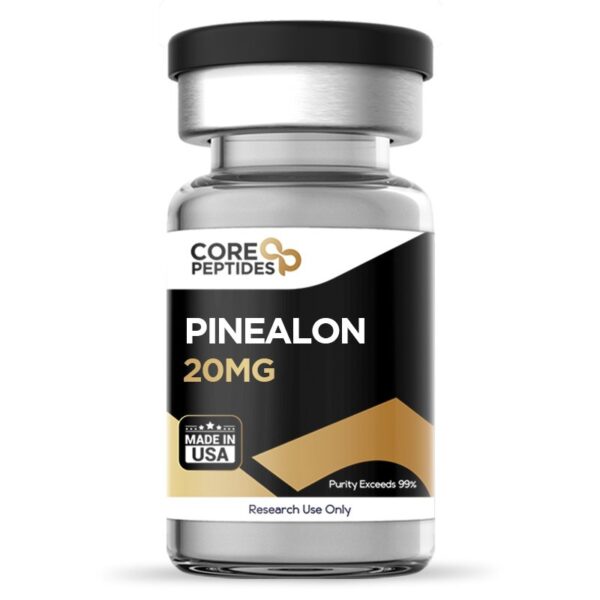
Pinealon (20MG)
CHF 67.50
Pinealon is a synthetic tripeptide bioregulator with the amino acid sequence Glu-Asp-Arg (EDR), developed within the Khavinson peptide research program. Researchers investigate Pinealon for its neuroprotective properties, including the reduction of oxidative stress, regulation of apoptosis, and potential modulation of gene expression through direct DNA interaction. Studies have explored its effects on cognitive function, neuronal survival, and neurogenesis in preclinical models. Available for laboratory research purposes only. Buy Pinealon in Switzerland from Core Peptides, a trusted research peptide supplier.
What Is Pinealon?
Pinealon is a synthetic tripeptide bioregulator with the amino acid sequence Glu-Asp-Arg (EDR). It belongs to the Khavinson peptide series—a family of short-chain peptides that emerged from research on tissue-specific bioregulators at the St. Petersburg Institute of Bioregulation and Gerontology. Researchers originally designed Pinealon as a short brain-targeted analog of larger peptide extracts isolated from pineal and brain cortex tissue.
As a tripeptide—a peptide composed of exactly three amino acids—Pinealon has attracted research interest for its proposed ability to penetrate cellular and nuclear membranes and interact directly with DNA, thereby modulating gene expression. Researchers classify Pinealon as a peptide bioregulator, meaning it may influence cellular processes through epigenetic and transcriptional mechanisms rather than through classical receptor-mediated signaling. For those looking to buy Pinealon in Switzerland, Core Peptides offers high-quality research-grade material for laboratory applications.
Pinealon Research Overview
Pinealon represents a well-characterized peptide bioregulator within the Khavinson research program. The peptide’s design—a simple tripeptide sequence of glutamic acid, aspartic acid, and arginine—belies its proposed biological activity. Researchers have investigated Pinealon primarily for its neuroprotective and cognitive-enhancing properties, with implications for understanding neuronal survival, oxidative stress, and brain function.
Research interest in Pinealon centers on its ability to reduce oxidative stress, regulate apoptosis, and potentially modulate gene expression through direct DNA interaction. Studies have demonstrated that Pinealon inhibits reactive oxygen species (ROS) accumulation, suppresses ERK 1/2 activation, and enhances the functional activity of key brain tissue cellular components while decreasing spontaneous cell death rates. Consequently, Pinealon has generated significant interest as a research tool for investigating neuroprotection, cognitive function, and age-related brain health.
When researchers choose to buy Pinealon in Switzerland for laboratory studies, they gain access to a compound that may help elucidate mechanisms of neuroprotection, oxidative stress reduction, and cognitive function at the molecular level.
How Does Pinealon Work?
The proposed mechanism of Pinealon involves multiple interconnected pathways, including direct DNA interaction, antioxidant activity, and regulation of apoptotic processes.
DNA Binding and Gene Expression Modulation
The primary mechanistic hypothesis advanced by the Khavinson group proposes that short peptides like EDR (Pinealon) interact directly with DNA promoter regions, complementarily binding to regulatory sequences and modulating transcription. Pinealon’s small size is believed to allow it to cross cellular and nuclear membranes and interact directly with DNA, thereby modulating gene expression. Molecular modeling studies have identified specific binding sites for EDR in the promoter regions of genes involved in neuroprotection and antioxidant defense.
Research has shown that EDR and the related tripeptide KED demonstrate opposite orientations but similar placement of charged and polar groups in complexes with DNA, consistent with arginine/lysine side-chain placement driving binding. Furthermore, Pinealon and related peptides appear to interact preferentially with CNG-containing deoxyribooligonucleotides (CNG sites are targets for cytosine DNA methylation in eukaryotes).
Antioxidant Activity
Pinealon demonstrates dose-dependent restriction of reactive oxygen species (ROS) accumulation in cerebellar granule cells and neutrophils. The peptide prevents ROS accumulation and suppresses the activation of ERK 1/2. Moreover, research suggests it protects neurons from oxidative stress, reduces reactive oxygen species (ROS), and may modulate gene expression and intracellular signaling pathways.
In rodent and cell-culture neuroprotection assays, Pinealon has been reported to reduce neuronal apoptosis under oxidative or excitotoxic stress and to upregulate antioxidant enzymes such as superoxide dismutase and glutathione peroxidase.
Anti-Apoptotic Effects
Pinealon regulates apoptosis by modulating caspase-3 levels. Studies have shown that in hypoxic brain conditions, Pinealon forwards the increase of neurogenesis and the decrease of neuroinflammatory reactions to a reference level. Meanwhile, the peptide enhances functional activity of key brain tissue cellular components while decreasing spontaneous cell death rates.
Researchers who buy Pinealon in Switzerland for research purposes can investigate these mechanisms across diverse experimental models of neuroprotection and cognitive function.
Why Is Pinealon Studied?
Researchers study Pinealon primarily for its potential relevance to neuroprotection, cognitive function, and age-related brain health. The peptide’s ability to reduce oxidative stress, regulate apoptosis, and modulate gene expression makes it a valuable tool for understanding the molecular basis of neuronal survival and brain function.
The peptide’s connection to the Khavinson bioregulator program has made it a focus of neuroprotective and cognitive research. Preclinical studies have explored Pinealon’s effects on cognitive function, neurogenesis, and oxidative stress reduction in various experimental models, including aged rats, hypoxia models, and prenatal hyperhomocysteinemia models.
Moreover, researchers study Pinealon in the context of age-related cognitive decline and neurodegenerative conditions. Studies in aged rhesus monkeys demonstrated that Pinealon improved spatial orientation, selective attention, and reduced overall excitability. Specifically, the tripeptide EDR (Pinealon) improves cognitive functions in primates and helps restore neuroimmunoendocrine balance.
Researchers who buy Pinealon in Switzerland from Core Peptides can incorporate this peptide into their studies on neuroprotection, cognitive function, oxidative stress, and neurogenesis.
Pinealon Research Areas
| Research Area | Description |
|---|---|
| Neuroprotection | Investigating Pinealon’s potential to protect neurons from oxidative stress and damage |
| Cognitive Function | Studying Pinealon’s effects on learning, memory, and cognitive performance |
| Oxidative Stress Reduction | Examining Pinealon’s ability to reduce reactive oxygen species (ROS) accumulation |
| Neurogenesis | Exploring Pinealon’s potential to promote neuronal growth and differentiation |
| Gene Expression Modulation | Investigating Pinealon’s interaction with DNA and modulation of transcription |
| Anti-Apoptotic Research | Preclinical research into Pinealon’s regulation of caspase-3 and apoptotic pathways |
| Mitochondrial Function | Studying Pinealon’s effects on mitochondrial health and energy metabolism |
| Age-Related Cognitive Decline | Exploring Pinealon’s potential relevance to cognitive aging and neuroprotection |
Scientific Research on Pinealon
Researchers have conducted scientific studies on Pinealon in both in vitro and in vivo settings, deriving evidence from cell cultures, rodent models, and non-human primate studies. The peptide originates from the Khavinson research program, which has investigated tissue-specific peptide bioregulators for several decades.
In Vitro Evidence
In vitro studies have demonstrated that Pinealon exhibits dose-dependent restriction of reactive oxygen species (ROS) accumulation in cerebellar granule cells and neutrophils. The peptide prevents ROS accumulation and suppresses the activation of ERK 1/2. For example, research has shown that Pinealon stimulates the functional activity of the main cellular elements of brain tissue and reduces the level of spontaneous cell death.
Khavinson and colleagues have published a series of cell-culture experiments arguing that short peptides like EDR can cross the cell membrane and reach the nucleus, where they make direct contact with double-stranded DNA in a sequence-selective manner. Additionally, molecular docking and modeling studies place the positively charged C-terminal arginine toward the DNA minor groove.
Preclinical Animal Studies
In rodent models, researchers have investigated Pinealon’s effects on behavior and neurochemical processes. For instance, a study in 18-month aged rats within models of acute hypobaric hypoxia and mild hypothermia examined the influence of Pinealon and Cortexin on behavior and neurochemical processes. Another study examined the regulation of cytokine content in blood serum and caspase-3 activity in the brains of old rats in a model of acute hypoxic hypoxia with Cortexin and Pinealon.
Furthermore, research has demonstrated that Pinealon protects rat offspring from prenatal hyperhomocysteinemia, resulting in significantly improved cognitive function and increased resistance of cerebellum neurons to oxidative stress.
In non-human primate studies, Pinealon improved spatial orientation in the implementation of the selection of visual stimuli and led to the improvement of selective attention by reducing the overall excitability of macaques. Consequently, the tripeptide EDR (Pinealon) improves cognitive functions in primates and helps restore neuroimmunoendocrine balance.
Human Research
Pinealon has limited human clinical evidence. As of April 2026, not a single completed randomized controlled trial in humans exists; the entire peer-reviewed evidence base is limited to in vitro cell studies and rodent preclinical models. Nevertheless, the Western randomized-controlled-trial evidence for any human outcome with Pinealon is essentially absent. Pinealon is not FDA-approved and has no clinical trials registered on ClinicalTrials.gov. Scientists who buy Pinealon in Switzerland should remain aware of these evidence considerations.
Pinealon Compared With Related Peptides
| Peptide | Relationship to Pinealon | Key Differences |
|---|---|---|
| Epithalon (AEDG) | Same Khavinson peptide series, different target | Epithalon is a tetrapeptide targeting pineal gland and circadian rhythms; Pinealon is a tripeptide targeting brain tissue |
| Vesugen (KED) | Same Khavinson peptide series, related sequence | Vesugen (Lys-Glu-Asp) targets fibroblasts; Pinealon (Glu-Asp-Arg) targets brain tissue; EDR and KED show opposite DNA orientations |
| Cortexin | Pinealon was isolated from Cortexin | Cortexin is a polypeptide neuroprotective complex; Pinealon is a synthetic tripeptide representing an active fragment |
| Semax | Both studied for cognitive and nootropic research | Semax is a synthetic ACTH analog with different mechanism; Pinealon is a Khavinson bioregulator targeting gene expression |
| Bronchogen | Same Khavinson peptide series | Bronchogen targets bronchial epithelial cells; Pinealon targets brain tissue |
Research Applications
Researchers utilize Pinealon in a variety of laboratory research applications, primarily in the fields of neuroscience, neurobiology, and cognitive science. Key research applications include:
- Neuroprotection Studies: Investigating Pinealon’s potential to protect neurons from oxidative stress and damage
- Cognitive Function Research: Studying Pinealon’s effects on learning, memory, and cognitive performance
- Oxidative Stress Research: Examining Pinealon’s ability to reduce reactive oxygen species (ROS) accumulation
- Neurogenesis Studies: Exploring Pinealon’s potential to promote neuronal growth and differentiation
- Gene Expression Research: Investigating Pinealon’s interaction with DNA and modulation of transcription
- Anti-Apoptotic Research: Preclinical research into Pinealon’s regulation of caspase-3 and apoptotic pathways
- Mitochondrial Function Studies: Studying Pinealon’s effects on mitochondrial health and energy metabolism
- Age-Related Cognitive Decline Research: Exploring Pinealon’s potential relevance to cognitive aging and neuroprotection
Researchers who buy Pinealon in Switzerland can incorporate this peptide into their experimental protocols across these diverse research areas.
Pinealon Product Specifications
| Specification | Detail |
|---|---|
| Product Name | Pinealon (EDR peptide) |
| Amount | 20mg |
| Form | Lyophilized powder |
| Sequence (Three-Letter) | Glu-Asp-Arg (EDR) |
| Sequence (One-Letter) | EDR |
| Molecular Formula | C15H26N6O8 |
| Molecular Weight | Approximately 418.40 g/mol |
| CAS Number | 175175-23-2 |
| PubChem CID | 10273502 |
| Synonyms | EDR peptide, Glu-Asp-Arg, EDR tripeptide |
| Research Category | Cognitive & Nootropic Peptides |
| Purity | Not provided |
| Storage | Refer to product documentation |
How to Evaluate Pinealon Quality
When sourcing Pinealon for research purposes, researchers should consider several quality indicators. A reliable Pinealon peptide supplier should provide:
- Identity Confirmation: Analytical verification that the peptide matches the expected sequence (Glu-Asp-Arg, EDR) and molecular weight (approximately 418.40 g/mol)
- Purity Analysis: Documentation of purity through methods such as HPLC (High-Performance Liquid Chromatography)
- Batch Information: Clear lot numbers and batch traceability
- Certificate of Analysis (CoA): Documentation of analytical testing results
- Proper Labeling: Accurate product identification and storage instructions
Researchers looking to buy Pinealon in Switzerland should seek suppliers who provide comprehensive documentation and quality assurance. Core Peptides remains committed to supporting research with properly documented products.
Understanding the Certificate of Analysis
A Certificate of Analysis (CoA) provides analytical data for a specific batch of a research peptide. For Pinealon research, a CoA typically includes:
- Identity Confirmation: Mass spectrometry or other analytical methods confirming the peptide’s identity
- Purity Assessment: HPLC chromatograms showing the purity of the peptide
- Batch/Lot Information: Unique identifiers for traceability
- Analytical Methods: Description of the testing methods used
Importantly, researchers should understand that a CoA demonstrates the chemical identity and purity of a peptide but does not establish safety, efficacy, therapeutic effectiveness, or suitability for human use. The CoA serves as a quality control document for research purposes only.
Storage and Stability
Proper storage of research peptides is essential for maintaining their integrity and stability. For Pinealon, researchers should refer to the product documentation provided with their order for specific storage recommendations.
General best practices for peptide storage include keeping lyophilized peptides in a cool, dry environment, protected from light and moisture. Some suppliers recommend storage at -20°C for long-term stability. For specific temperature requirements and reconstitution protocols, consult the applicable product documentation or contact Core Peptides for the applicable storage specifications.
Research Considerations
Researchers incorporating Pinealon into their studies should be aware of several important considerations:
- Evidence Limitations: Pinealon has limited human clinical evidence. As of April 2026, not a single completed randomized controlled trial in humans exists; the entire peer-reviewed evidence base is limited to in vitro cell studies and rodent preclinical models.
- Experimental Status: Researchers consider Pinealon an experimental compound. Therefore, findings should be interpreted within the context of early-stage research.
- Model Differences: Results from cell cultures, rodent models, and non-human primates may not translate directly to human outcomes.
- Regulatory Status: Pinealon is not FDA-approved and is intended for laboratory research use only. No clinical trials are registered on ClinicalTrials.gov.
- Quality Considerations: Researchers should verify the quality and identity of their Pinealon through appropriate analytical methods.
- Mechanistic Context: Pinealon’s proposed mechanisms involve direct DNA interaction, antioxidant activity, and anti-apoptotic effects. Researchers should consider appropriate experimental approaches to investigate these pathways.
- Source Lineage: Essentially all published research originates from Khavinson’s group and affiliated institutions, with no independent Western replication.
Researchers who buy Pinealon in Switzerland should ensure their studies include appropriate controls and interpret findings with scientific rigor.
Frequently Asked Questions About Pinealon
What is Pinealon?
Pinealon is a synthetic tripeptide bioregulator with the amino acid sequence Glu-Asp-Arg (EDR), developed within the Khavinson peptide research program as a brain-targeted analog.
What is Pinealon researched for?
Researchers primarily investigate Pinealon for its neuroprotective properties, including the reduction of oxidative stress, regulation of apoptosis, and potential modulation of gene expression through direct DNA interaction.
What is the amino acid sequence of Pinealon?
The amino acid sequence of Pinealon is Glu-Asp-Arg (EDR).
What is the molecular weight of Pinealon?
The molecular weight of Pinealon is approximately 418.40 g/mol.
What is the CAS number for Pinealon?
The CAS number for Pinealon is 175175-23-2.
Is Pinealon a Khavinson peptide?
Yes, Pinealon belongs to the Khavinson peptide series—a family of short-chain peptide bioregulators developed through research on tissue-specific regulators.
What is the proposed mechanism of Pinealon?
Pinealon is proposed to penetrate cellular and nuclear membranes to interact directly with DNA, thereby modulating gene expression. It also demonstrates antioxidant and anti-apoptotic effects.
Does Pinealon have human clinical evidence?
Pinealon has limited human clinical evidence. As of April 2026, not a single completed randomized controlled trial in humans exists.
Is Pinealon FDA-approved?
Pinealon is not FDA-approved. It is intended for laboratory research use only and is not approved for human consumption or therapeutic use.
Can I buy Pinealon in Switzerland?
Yes, researchers can buy Pinealon in Switzerland from Core Peptides for laboratory research purposes.
What is the primary research category for Pinealon?
Pinealon belongs to the Cognitive & Nootropic Peptides category, with secondary relevance to Anti-Aging & Longevity research.
What related peptides are studied alongside Pinealon?
Related peptides from the Khavinson series include Epithalon, Vesugen, Bronchogen, and others. Pinealon is also related to Cortexin, from which it was isolated.
What animal models have been used in Pinealon research?
Researchers have studied Pinealon in aged rat models (hypoxia and hypothermia), prenatal hyperhomocysteinemia models, and non-human primate models (rhesus monkeys).
How should Pinealon be stored?
Refer to the product documentation for specific storage recommendations. Peptides are generally stored lyophilized in cool, dry conditions, with some suppliers recommending -20°C.
What is the difference between Pinealon and Vesugen?
Pinealon is Glu-Asp-Arg (EDR) targeting brain tissue, while Vesugen is Lys-Glu-Asp (KED) targeting fibroblasts. EDR and KED show opposite orientations but similar placement of charged groups in complexes with DNA.
Related Research Peptides
Researchers interested in Pinealon may also find the following related peptides relevant to their work:
- Epithalon – A Khavinson tetrapeptide targeting pineal gland and circadian rhythms
- Vesugen – A Khavinson tripeptide targeting fibroblasts
- Semax – A nootropic peptide studied for cognitive enhancement and neuroprotection
- Cortexin – A polypeptide neuroprotective complex from which Pinealon was isolated
- Selank – A cognitive peptide with anxiolytic properties
For a comprehensive selection of research peptides in Switzerland, explore the Core Peptides catalog.
Explore Cognitive & Nootropic Peptides
Pinealon is part of our Cognitive & Nootropic Peptides category, which features a range of research peptides investigated for their potential effects on cognitive function, neuroprotection, and brain health. Browse our selection to find the right peptides for your laboratory research.
Explore Related Research Categories
Researchers may also find the following related categories relevant to Pinealon research:
- Anti-Aging & Longevity – Peptides investigated for age-related cognitive research applications
- Cellular Research & Signaling – Peptides studied for cellular signaling and gene expression
- Healing & Regeneration Peptides – Peptides investigated for tissue regeneration and repair
Further Research
Researchers interested in learning more about Pinealon and related peptides should consult the primary scientific literature. Key areas of investigation include neuroprotection, oxidative stress, cognitive function, and epigenetic regulation. The PubMed database is an excellent resource for accessing peer-reviewed research articles on these topics.
Research Disclaimer
Core Peptides supplies Pinealon as a research peptide for laboratory research purposes only. It is not approved for human consumption, therapeutic use, or medical treatment. All information provided is for educational and scientific reference purposes only and does not constitute medical advice. Researchers are responsible for ensuring compliance with all applicable laws and regulations governing the use of research peptides in their jurisdiction, including Switzerland.
Soyez le premier à laisser votre avis sur “Pinealon (20MG)”
Vous devez être connecté pour publier un avis.
Produits similaires
Cognitive & Nootropic Peptides
Cognitive & Nootropic Peptides

Cognitive & Nootropic Peptides
Cognitive & Nootropic Peptides
Cognitive & Nootropic Peptides
Cognitive & Nootropic Peptides
Cognitive & Nootropic Peptides
Cognitive & Nootropic Peptides
Avis
Il n’y a pas encore d’avis.